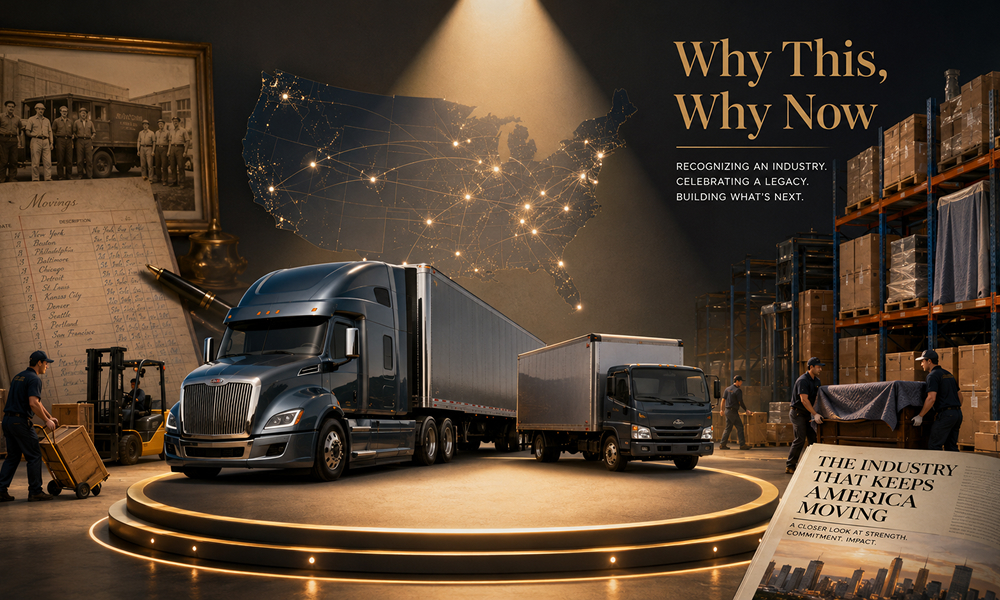
Introducing The Fortune 100 of Moving: the Nation’s Top Moving Companies
Supermove launches a magazine-quality editorial series that profiles the top 100 moving enterprises in North America and celebrates the leaders, legacies, and o
Read more




.png)
What happens when the industry's most ambitious executives gather to challenge how moving companies will compete, operate and grow? A look inside F50 2026:
View our photo album for a glimpse inside this year's F50:
A year ago, we brought together some of the industry's most forward-thinking leaders to explore how AI would transform moving. This year, the future we predicted was already taking shape.
Supermove hosted the second annual F50 of Moving Leadership Summit in Charleston, bringing together executives from some of the largest and fastest-growing moving companies and van lines to challenge how the industry will compete, operate and grow in the next decade.
.png)
By the end, one thing was clear: The biggest threat to established moving companies isn't a new competitor. It's a new way of operating.
Ideas that sounded futuristic twelve months ago are already becoming real. AI agents can execute work, not simply answer questions. Customers are beginning to use AI to discover and interact with businesses. Moving companies are confronting how much of their operating knowledge still lives inside the heads of their people.
The questions facing CEOs are shifting with it. Less “What can AI do?” and more “What kind of company do we need to become?”
That was the conversation in Charleston.
Wonjun Jeong, CEO of Supermove opened F50 by returning to the predictions he made on the same stage one year earlier. Some were right. Some were only partly right. And one of the biggest was wrong for an unexpected reason: 2030 came early.
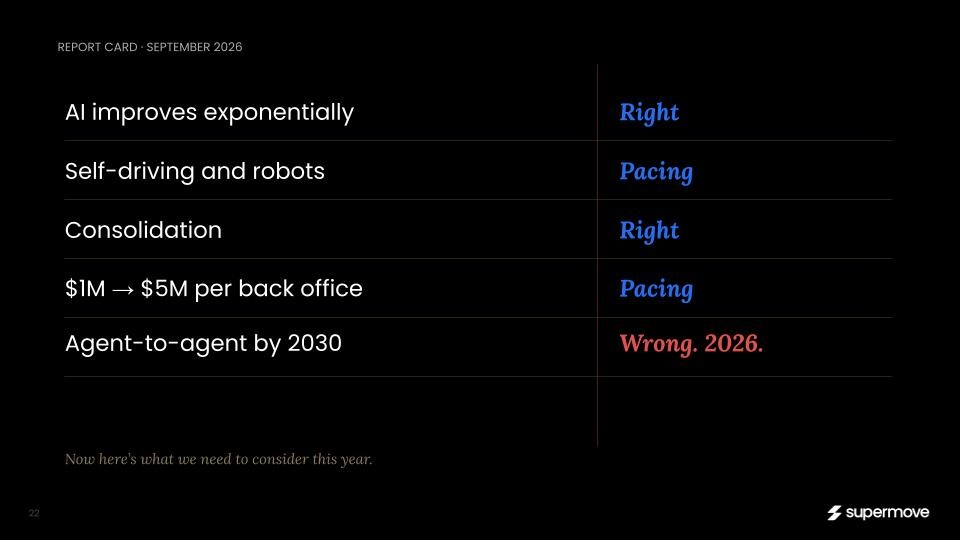
AI agents interacting directly with businesses on behalf of consumers were supposed to be years away. Today, Google is already using AI to contact certain local businesses, collect information and bring answers back to consumers.
It changes a basic assumption about how customers find and choose a moving company. The customer may not always do the searching, comparing and calling themselves. Their AI may increasingly do some of it for them.
Wonjun brought it to life with the story of a Charleston hotel clerk a century ago. The clerk kept a trusted book of businesses he recommended to guests. Being in that book meant business.
A hundred years later, the book is becoming digital.
You’re not just selling to the guest anymore. You’re selling to the book.
But being recommended is only half the battle. The night before his keynote, Wonjun's team called 12 moving companies represented at F50.
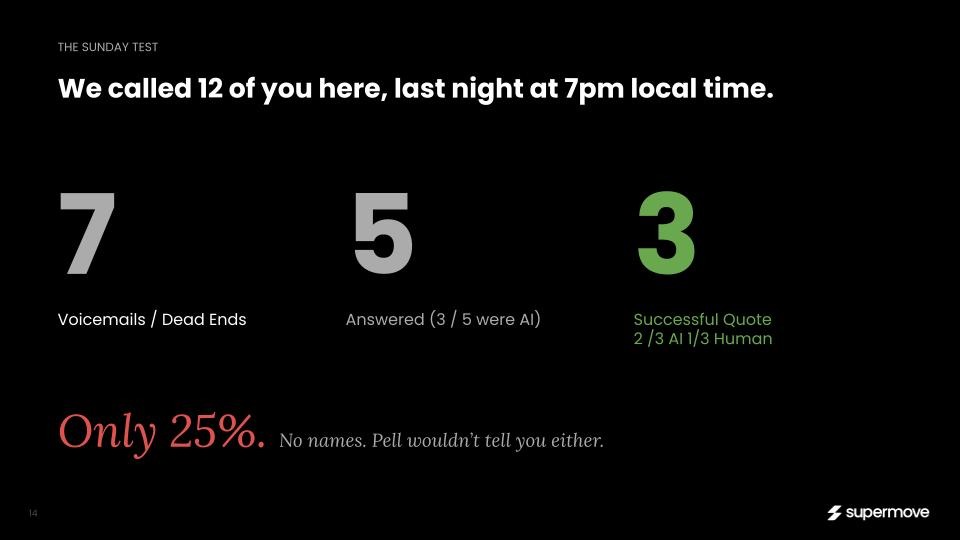
Seven calls went to voicemail or dead ends. Only five were answered, three by AI. Just three produced a successful quote.
His point was simple: Voicemail is becoming a lost lead. When a customer's AI assistant encounters voicemail, it doesn't leave a message and wait for a callback. It moves on to the next company.
And the stakes extend well beyond sales. Wonjun predicted that by next year's F50, the highest-margin moving companies will have AI agents working across every function of their business.
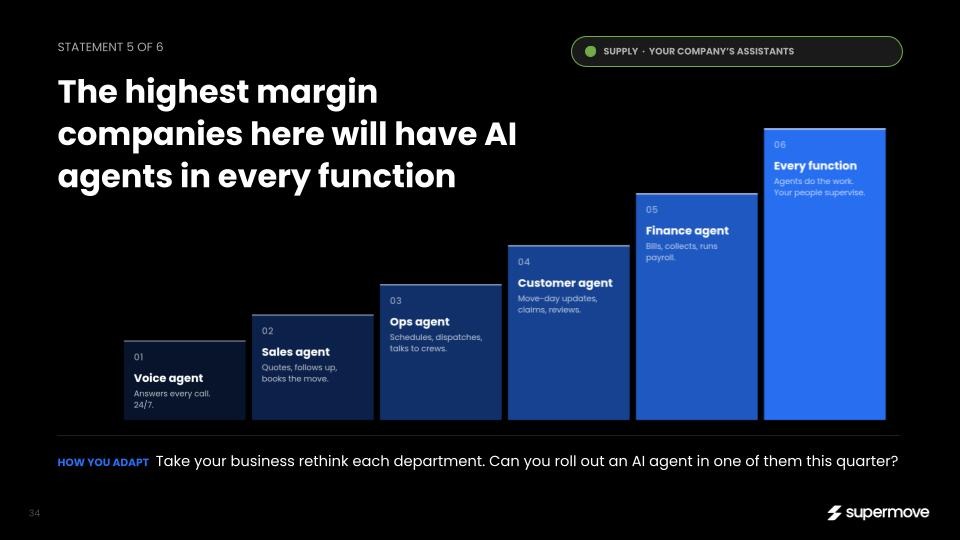
Not simply helping employees complete tasks, but fundamentally changing how much work a company can execute with the resources it already has.
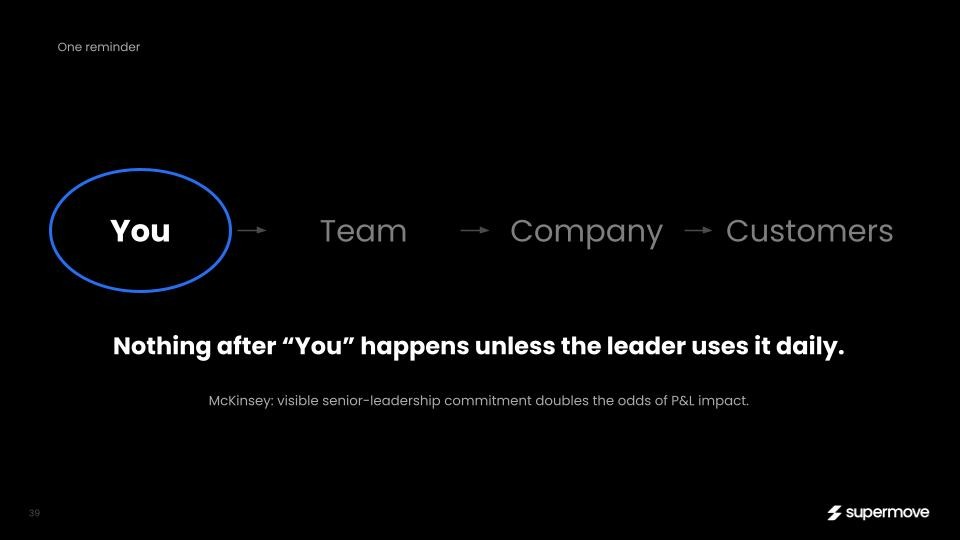
That transformation, he argued, has to start at the top. Leaders cannot delegate AI adoption to an IT department and expect the organization to follow. They need to use it themselves, understand what's possible and set the pace for the rest of the company.
Wonjun closed with six new predictions for September 2027, spanning how customers will buy moving services, how companies will operate and how leaders themselves will work.
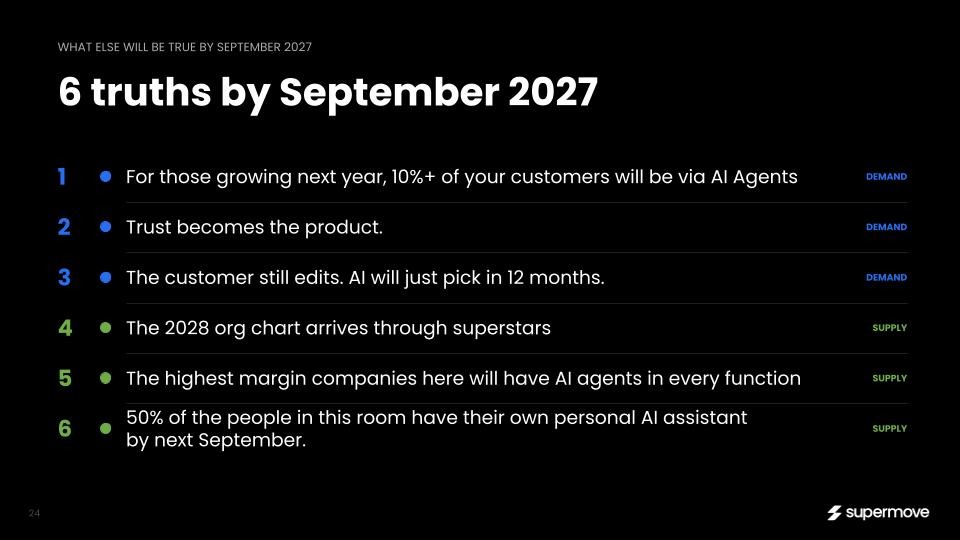
The question is no longer whether AI will change moving. It's how much will change before we're together again.
For decades, moving companies have competed for visibility through search rankings, advertising and referrals. But the way customers discover businesses is being rewritten.
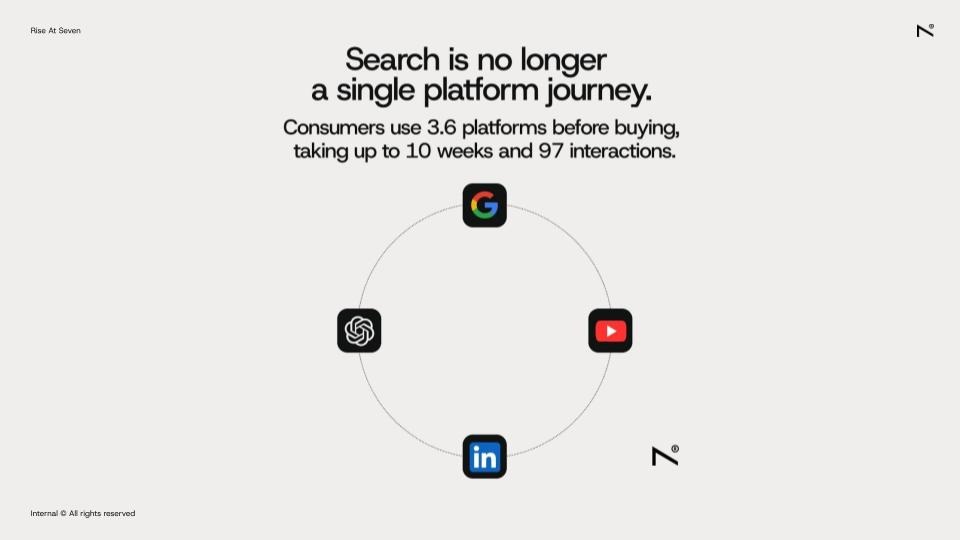
Will Hobson, VP of PR at Rise at Seven, showed how discovery is spreading across Google, ChatGPT, Reddit, YouTube, social media and publishers. Customers are forming opinions about companies long before they visit a website, often based on what other people and platforms are saying about them.
And they aren’t searching for products and services right away. They’re looking for answers.
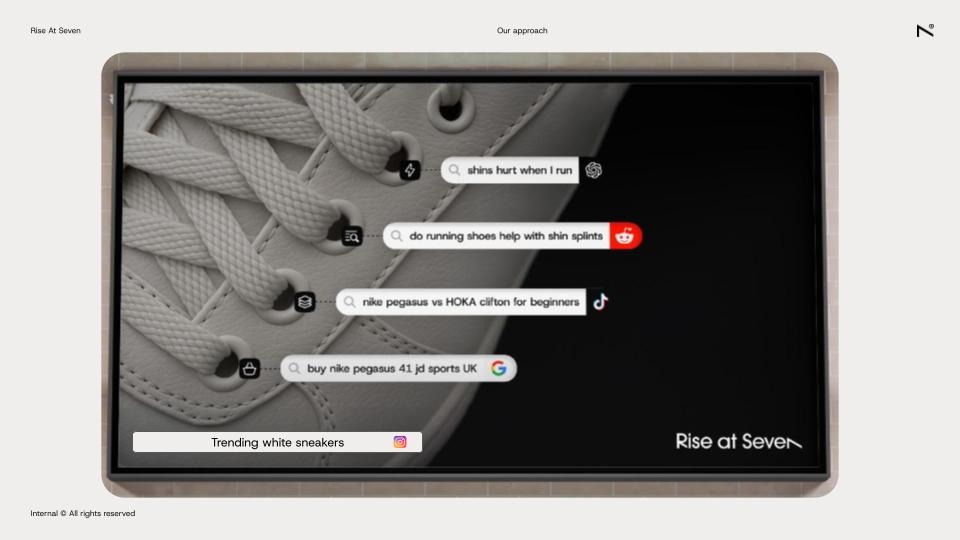
And as AI increasingly influences which businesses get recommended, those signals become even more important.
Your reputation is no longer just what you tell the market. It's what the market tells AI about you.
Will challenged leaders to think beyond traditional advertising and create brands that earn attention. Moving companies have a unique advantage here: they're present during some of the biggest transitions in people's lives, and their trucks, crews and customer stories are visible in communities every day.
Yet much of the industry still markets itself through interchangeable promises of quality, reliability and experience.
The opportunity isn't simply to rank higher or spend more on advertising. It's to build a brand that people talk about, publishers reference, customers remember and AI has a reason to recommend.
He even shared a framework on how to be impossible to ignore:
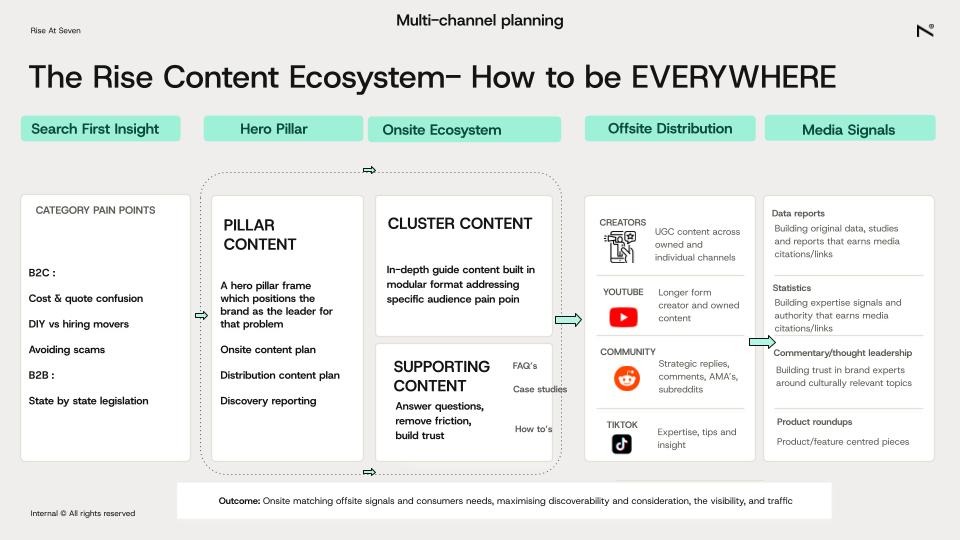
When you’re known, you don’t need to be found.
Andy Raskin, strategic narrative advisor to some of the world's most recognizable companies, challenged the room with a different question: What does your customer actually want?
Andy used AI to analyze the websites of the Fortune 50 of Moving. The results were revealing, if unsurprising. Most companies were making remarkably similar promises:
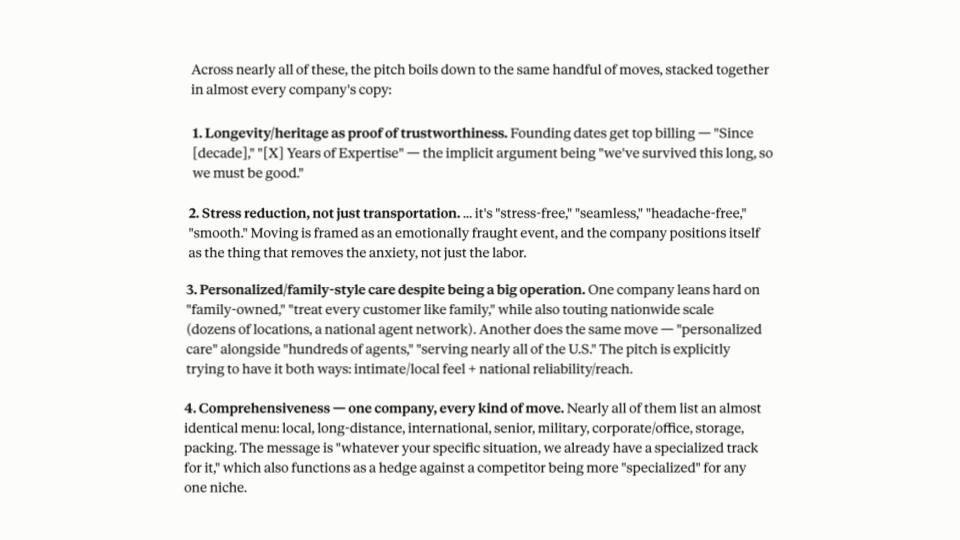
When every competitor makes some version of the same promise, customers have little reason to believe one company is meaningfully different.
Andy argued that great companies don't win by making better claims. They win by giving customers a compelling vision of a future worth pursuing.
He pointed to brands like Airbnb, which moved beyond selling accommodation to the idea of living like a local, and Nike, which expanded the meaning of being an athlete. Their narratives changed how customers thought about the category itself.
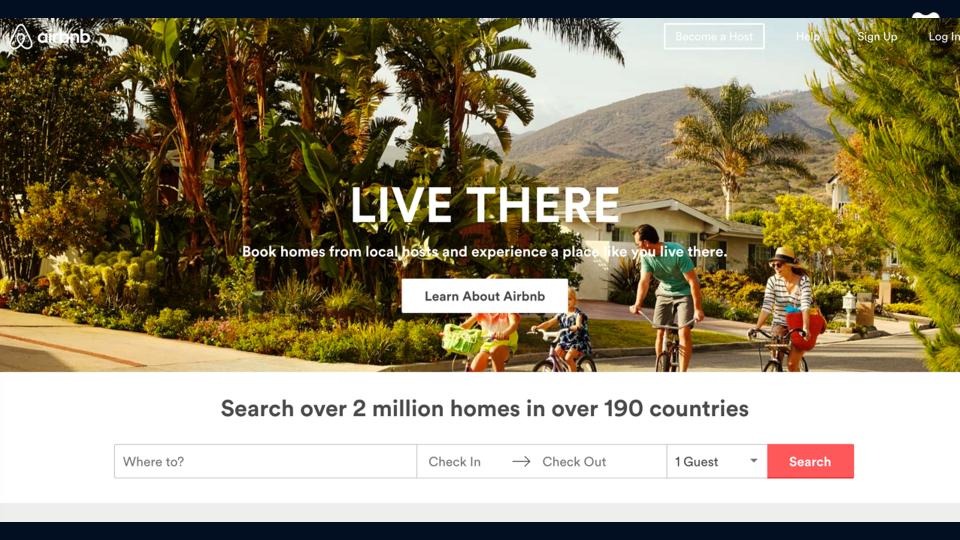
Their stories weren't about what they sold. They were about what customers could become or experience.
Start with the future your customer wants, not the service you provide.
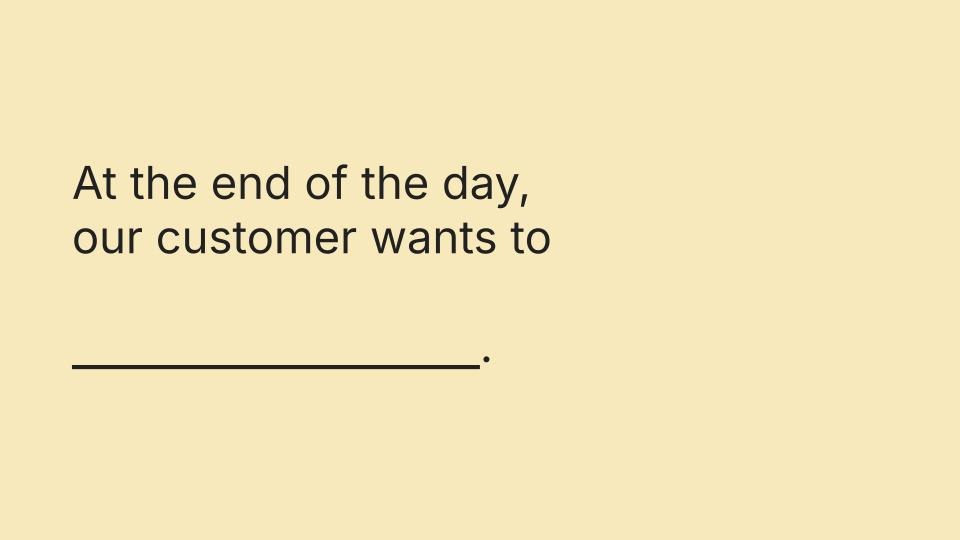
All three of these brands could literally just say what they do, but instead they are giving customers something bigger to aspire to than the product itself.
A Promised Land becomes compelling when customers understand why the old way of thinking is holding them back.
The strongest narratives don't just promise a better outcome. They change what customers believe is possible.
For movers, that might mean challenging the assumption that moving is inevitably stressful, disruptive and something customers simply have to endure.
Only after establishing the destination and the necessary shift in thinking does the company explain how it will help customers get there.
This is where your capabilities, people, technology and experience matter. But instead of presenting them as a list of reasons you're better than competitors, they become the specific advantages that make your promised future achievable.
Your services aren't the story. They're how you deliver on the story.
Andy then challenged F50 leaders to imagine starting a moving company from scratch with unlimited resources. What future would they promise customers? What assumptions about moving would they challenge? And what would they build differently to deliver on that promise?
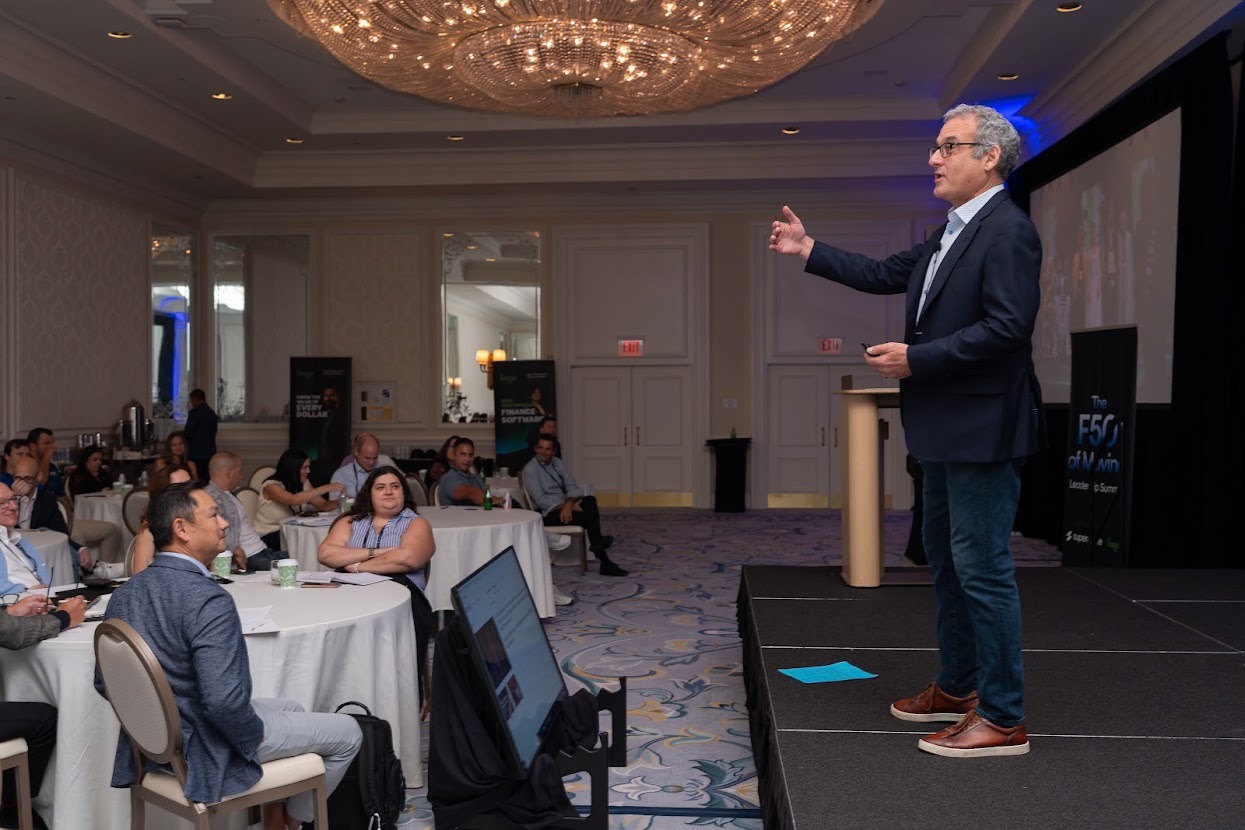
What the group came up with — we’ll keep it exclusive to those leaders.
The question isn't how to convince customers you're a better moving company. It's what you're helping them move toward.
And this goes well beyond marketing. A strong narrative gives employees something to build toward, helps attract exceptional talent and guides decisions about where the company invests and innovates.
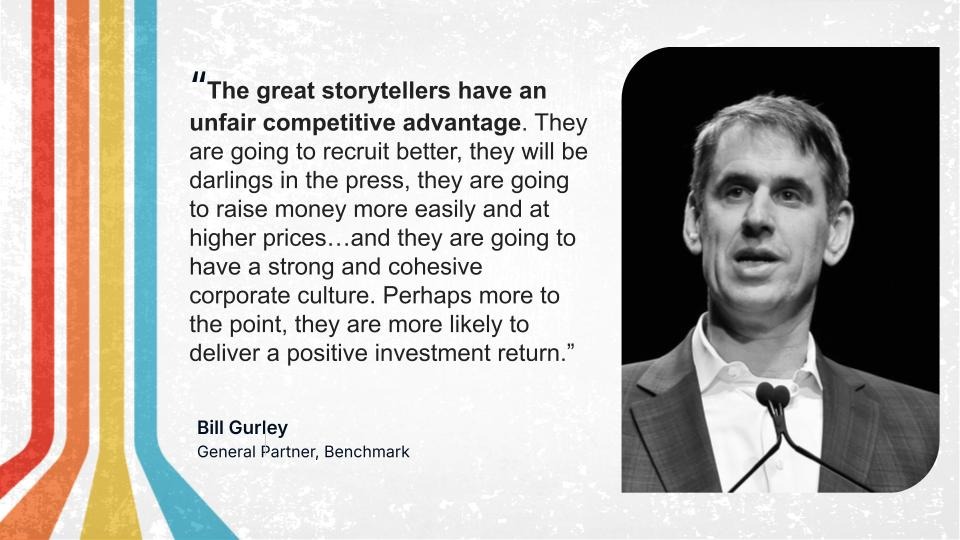
The most powerful stories don't just describe what a company does. They help determine what it becomes.
Mark Miyashita, CTO of Supermove, made the technology tangible through one intentionally ordinary example: a customer rescheduling a move.
The message comes in messy. The closing date changed. There are two possible new dates. And, by the way, Mom's piano is coming now.
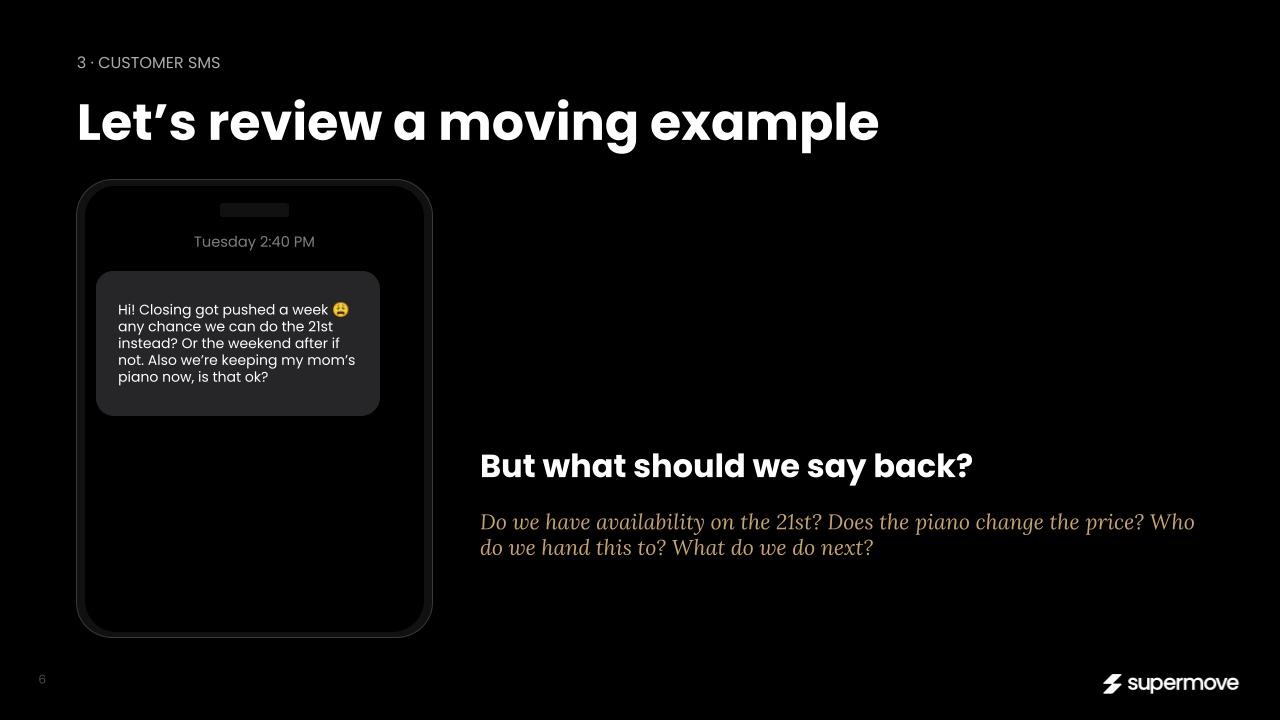
A great coordinator knows immediately that this isn't just a calendar change. They think about crew availability, trucks, specialty items, pricing, policies, customer communication and when an exception needs approval.
AI can increasingly understand the request and execute the mechanics.
The harder question is: How does it know what your company would do?
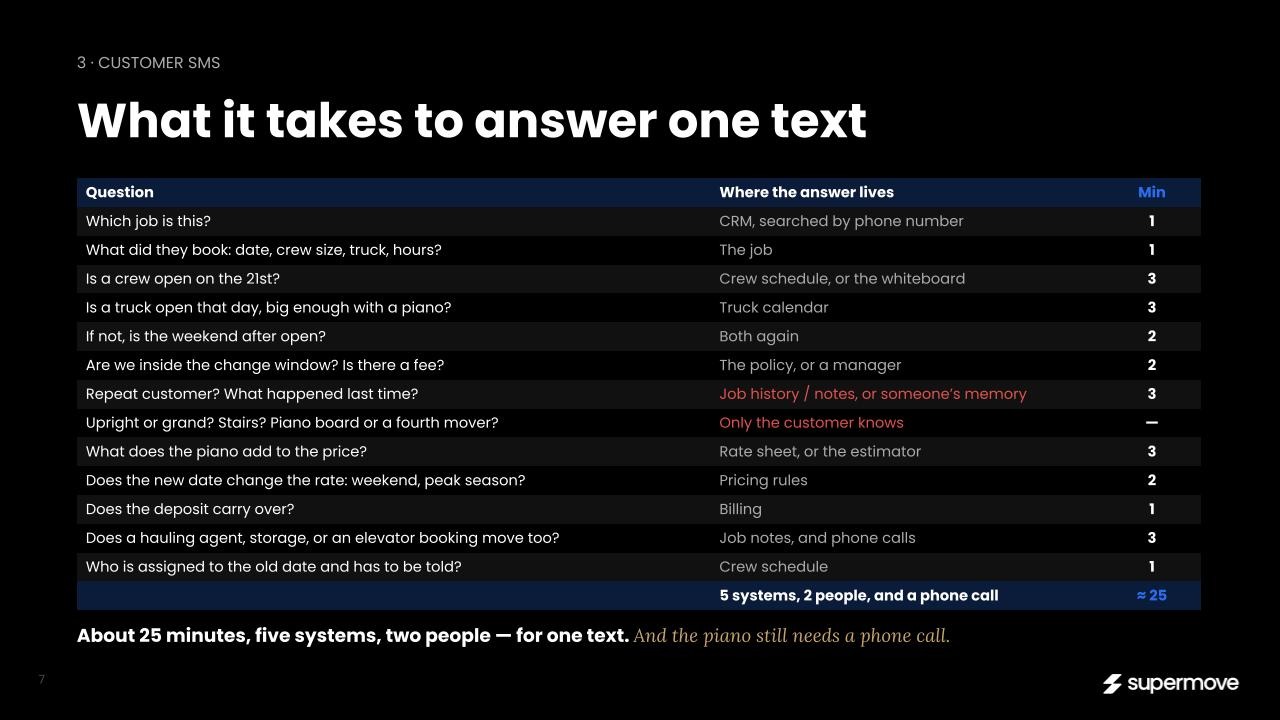
In many moving companies, the answer still lives in someone's head.
That became one of the clearest ideas of F50:
Your biggest operating constraint isn't labor. It's intelligence trapped in labor.
For years, the only way to scale an experienced employee's judgment was to add more experienced employees. AI creates another possibility: capture that judgment, turn it into a playbook, let agents execute against it and use human corrections to continuously make the system better.
That changes the economics of knowledge inside a company.
For 20 years, your best operator's judgment was labor. Once you capture it, it becomes infrastructure.
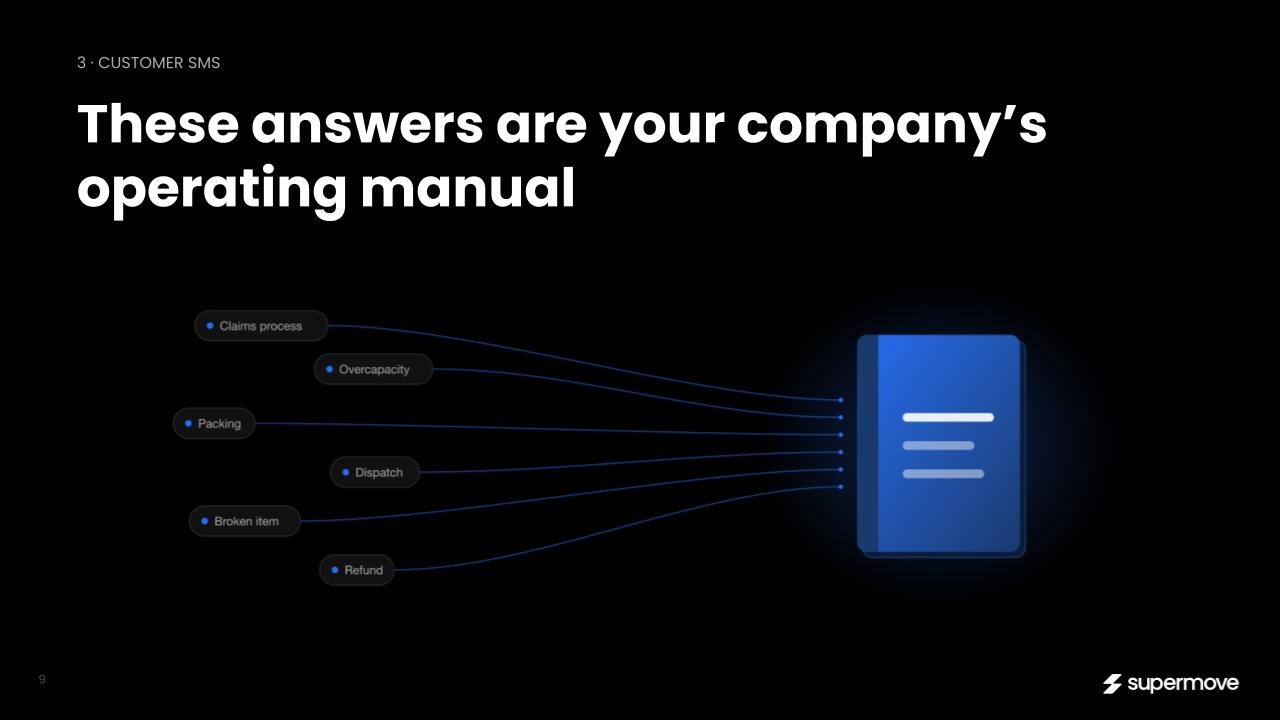
Mark's advice wasn't to automate the company overnight. Pick one workflow. Capture how your best people really handle it. Run it. Review it. Correct it. Let autonomy increase as the system proves itself.
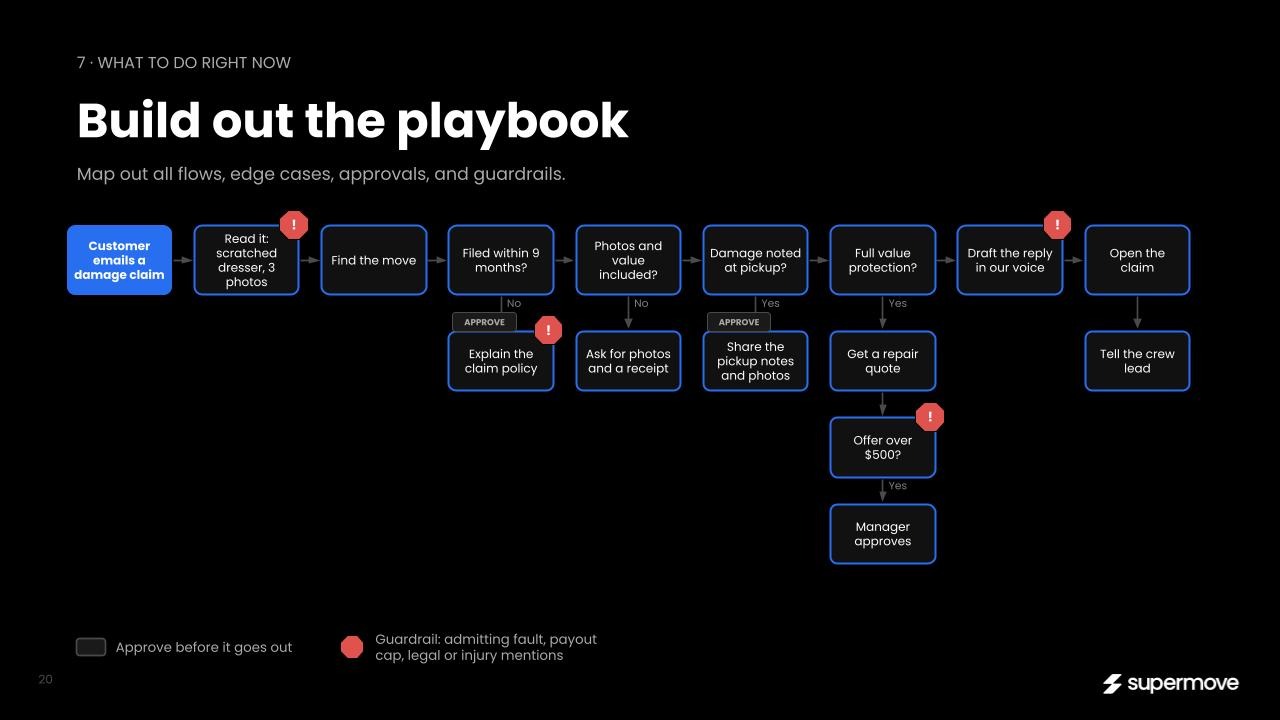
Autonomy isn't something you turn on. It's something your company earns.
That raised the natural next question: what happens when AI moves from recommending an action to actually taking one?
Jon Fasoli, SVP at Sage, brought that question into finance, where the consequences become particularly clear.
They described the progression from task-based AI, to generative AI, to agents capable of planning, reasoning and completing multi-step workflows. In that model, the relationship between human and software begins to flip: AI increasingly becomes the doer while the human reviews, governs and intervenes when necessary.
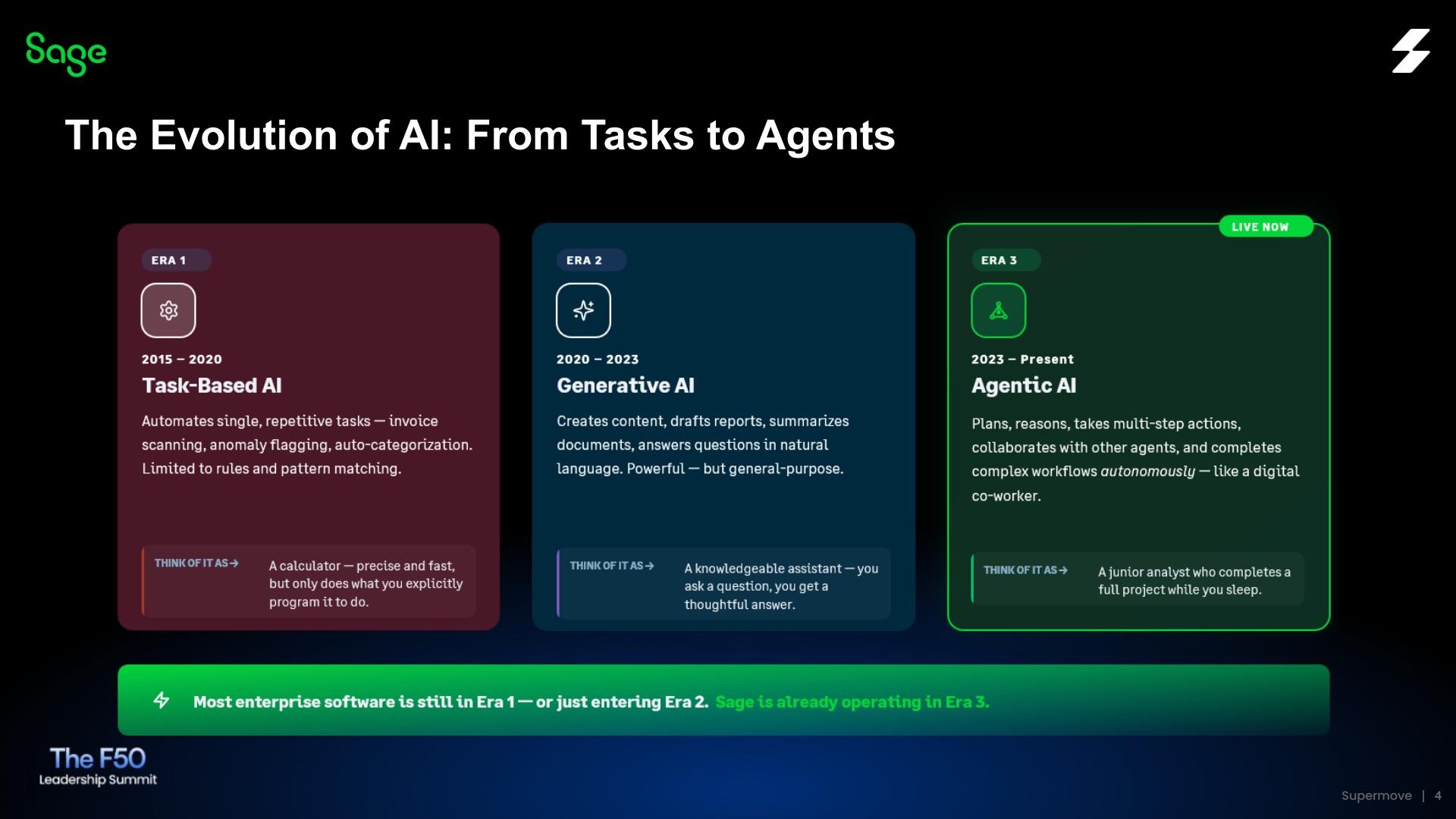
That only works when trust is designed into the system.
Sage framed that trust around three ideas: confidence, control and accountability. Leaders need to understand why an agent acted, determine where humans need to approve its decisions, and have a clear record of what happened.
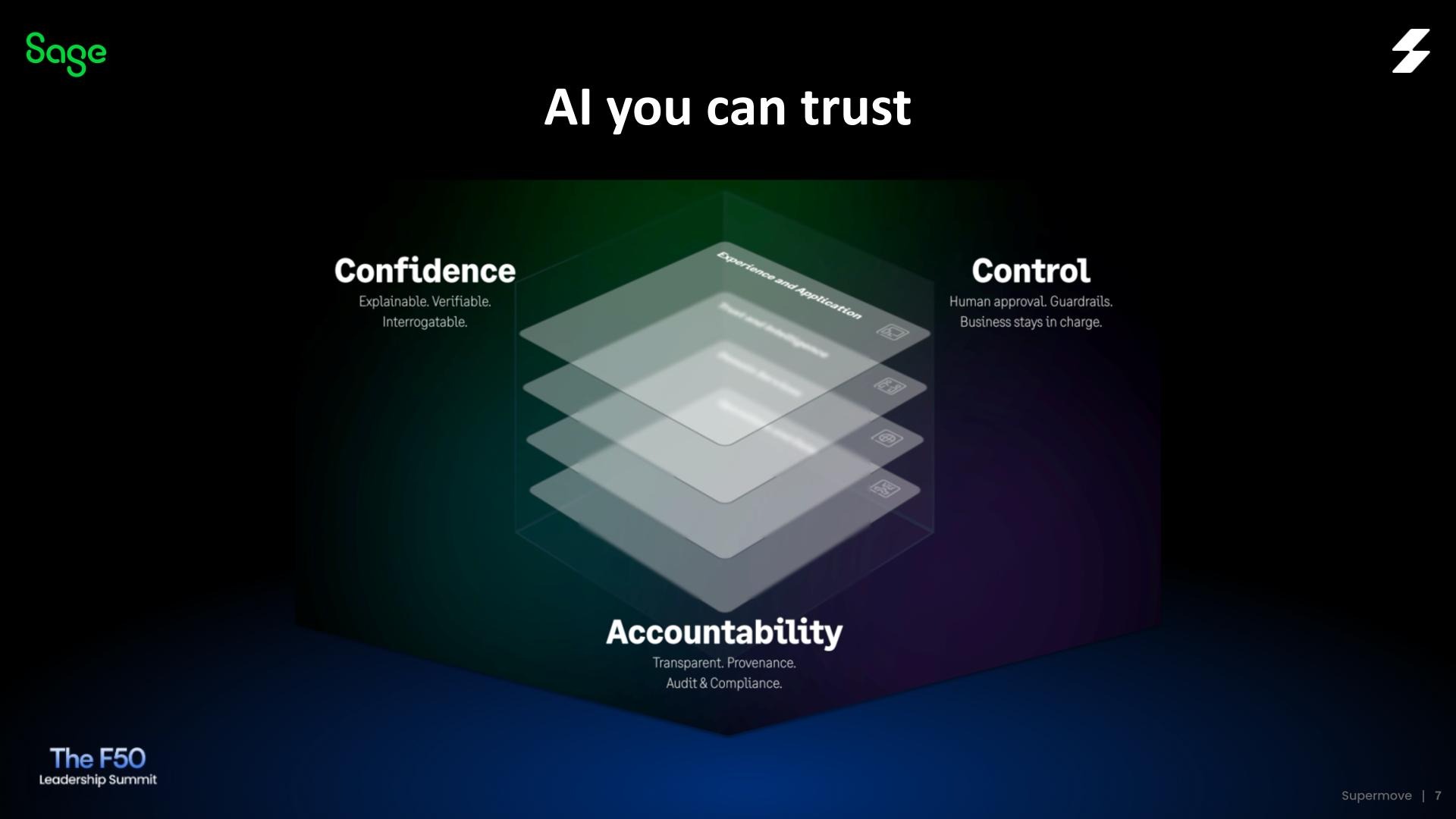
That distinction matters well beyond finance.
As agents take on more consequential work, the strongest systems won't remove people indiscriminately. They'll become much clearer about where human judgment matters and where it no longer needs to sit in the middle of every transaction.
That same shift creates a very different talent question.
In her fireside conversation, Jamie Savage, CEO of The Leadership Agency, pushed the room beyond the easy answer that AI will free people to do “strategic work.”
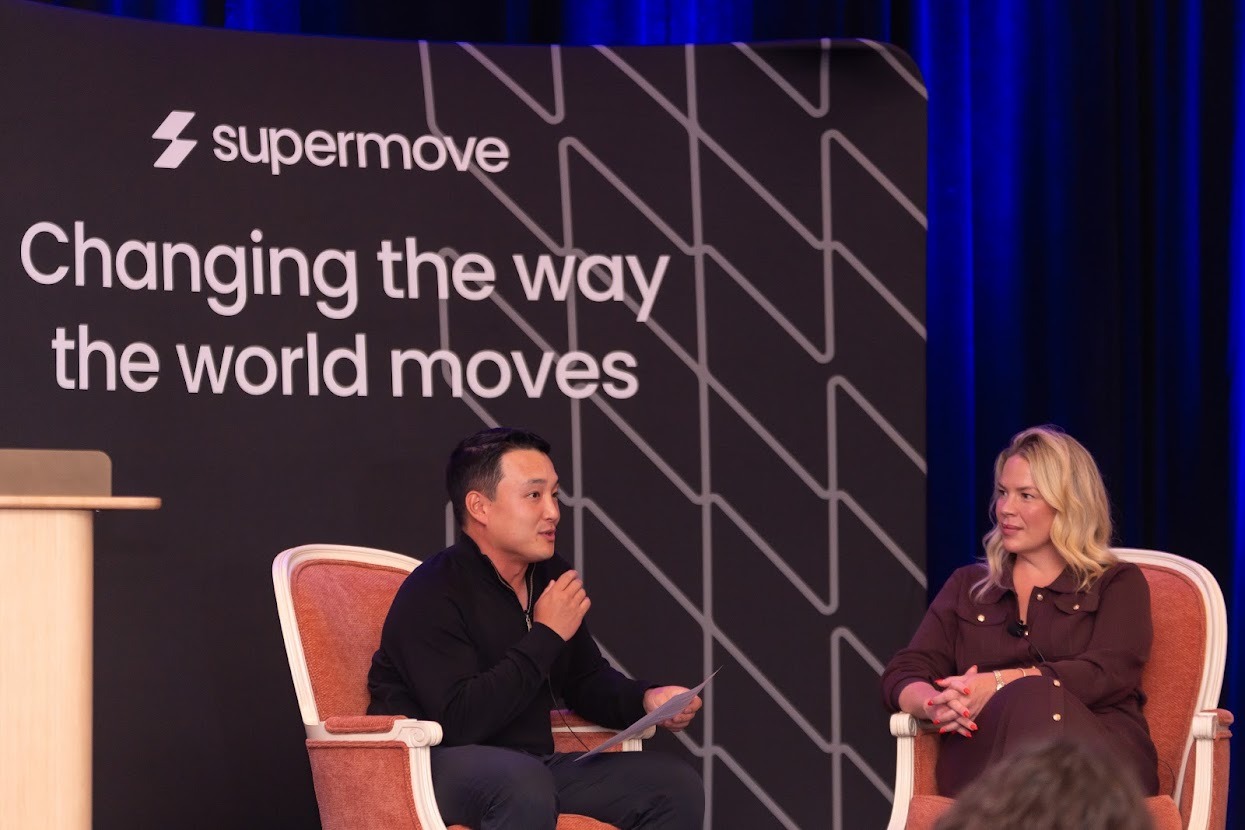
For a great branch manager, it may mean spending less time personally resolving the same exceptions and more time defining how the organization should resolve them. For a sales leader, less administrative execution and more coaching, judgment and improving how the company sells. For finance, less assembling information and more interpreting it.
The skills that made someone exceptional don't suddenly become irrelevant. But their value has to move upward.
And that creates a harder leadership question.
The people who got you to $500 million may not automatically be the people who reinvent the next $500 million.
The conversation touched the uncomfortable side of that reality too: what leaders owe loyal employees whose roles are changing, how to know who can evolve with the company, and how to keep ambitious people motivated when work they were once praised for becomes automated.
But there is an opportunity hidden inside that disruption.
For years, technology companies had a gravitational pull on ambitious talent because they offered the chance to build the future. AI gives established industries a different story to tell.
Moving is enormous. It's complicated. It's physical. It's human. And much of how it operates is suddenly open to reinvention.
Some of the best careers of the AI era may be built inside industries that have yet to be reinvented.
By the end of the day, an interesting pattern had emerged:
Different sessions, but the same underlying leadership question:
Which assumptions about your company are you willing to let go of?
AI may be the catalyst, but simply adding AI to the existing organization isn't much of a transformation. The larger opportunity is to reconsider processes, roles and operating models that made complete sense when the company was built but don't necessarily make sense for where it's going.
The winners won't necessarily be the companies that buy the most AI. They'll be the ones willing to redesign around what is now possible.
F50 ended differently this year.
Instead of another keynote, the final session was shaped by questions submitted anonymously by the leaders attending the Summit.
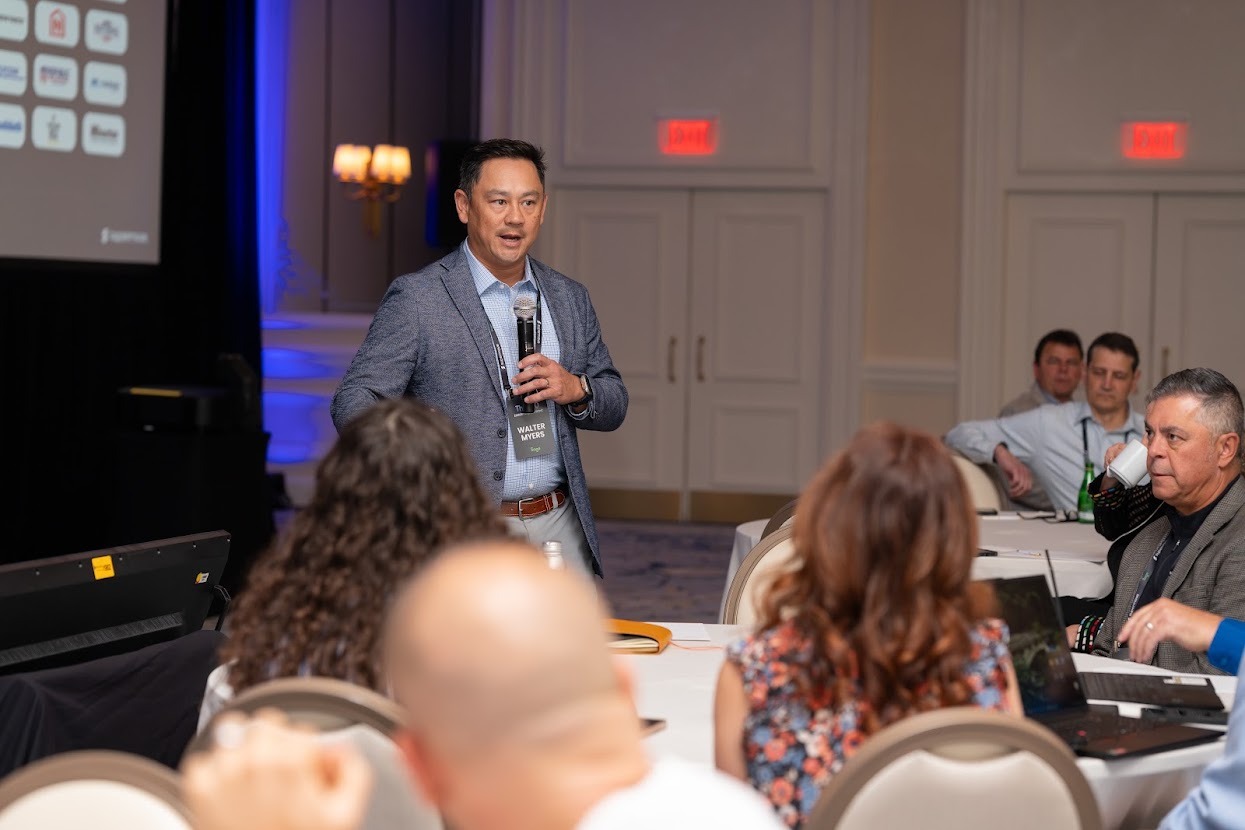
There wasn't supposed to be one answer. The value was having leaders who are normally competitors compare theirs.
For two days in Charleston, CEOs and executives challenged assumptions, shared what was working and talked candidly about problems almost everyone in the room was trying to solve.
The moving industry is entering a period where some of its oldest assumptions about labor, technology, customer acquisition, leadership and scale are being rewritten at the same time.
Last year, we called F50 the beginning of a community.
Charleston proved it.
If you believe you are a strong contender to be on the Fortune 50 of Moving in 2027, send us a note on why at info@supermove.com