Best Residential Movers in Texas 2026 | Supermove
Looking for a moving company in Texas? You're probably looking for a company that has a good track record, and fits your timeline and budget. According to our d
Read more



There are 23% fewer moves happening right now than the historic norm. Existing home sales hit 3.98 million annualized in March 2026 — well below the 5.2 million we used to call normal. Mortgage rates sit above 6%. The Census Bureau says only 11% of Americans moved in 2024, the lowest rate since 1948.
FHFA research shows mortgage lock-in will suppress home sales for years. The NAR just revised its 2026 forecast from +14% growth to +4%.
So you can’t grow by waiting for more moves to show up. How do you better capture the moves that are happening?
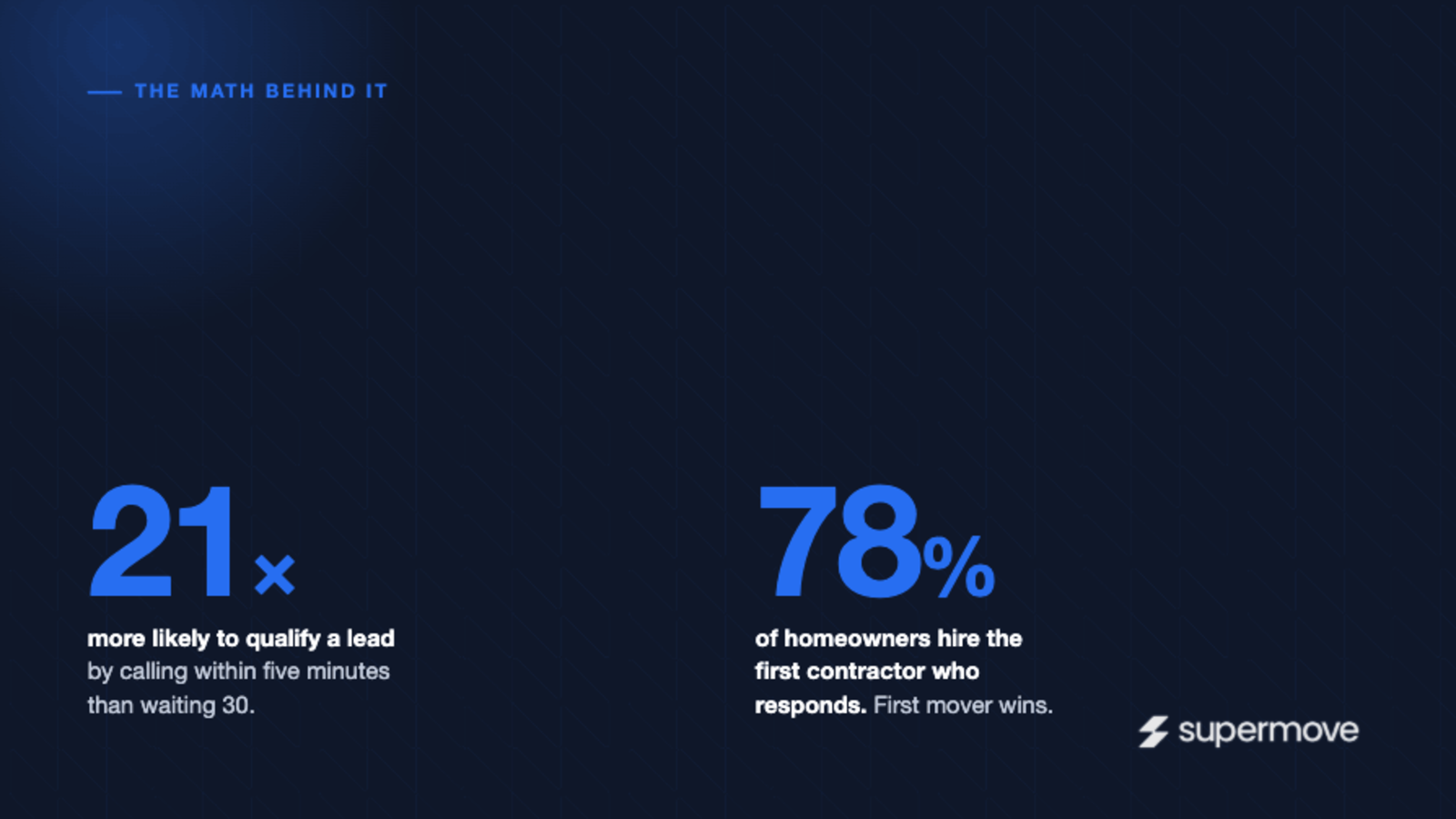
MIT’s lead response study found that calling a prospect within five minutes makes you 21 times more likely to qualify that lead than waiting 30 minutes. Industry research shows 78% of homeowners hire the first contractor who responds.
Twenty-one times more likely. Seventy-eight percent first-responder wins. If we apply this to your call center at 6:47 PM on a Tuesday, or 7:15 AM on a Saturday when nobody’s clocked in yet, or noon when your whole team is grabbing lunch.
A Supermove report found that the majority of moving quote requests arrive outside business hours. And across the industry, the data tells a consistent story—enterprise movers with lean call center teams are missing somewhere between 20-30% of inbound calls during peak periods.
Each one of those missed calls has a dollar value.
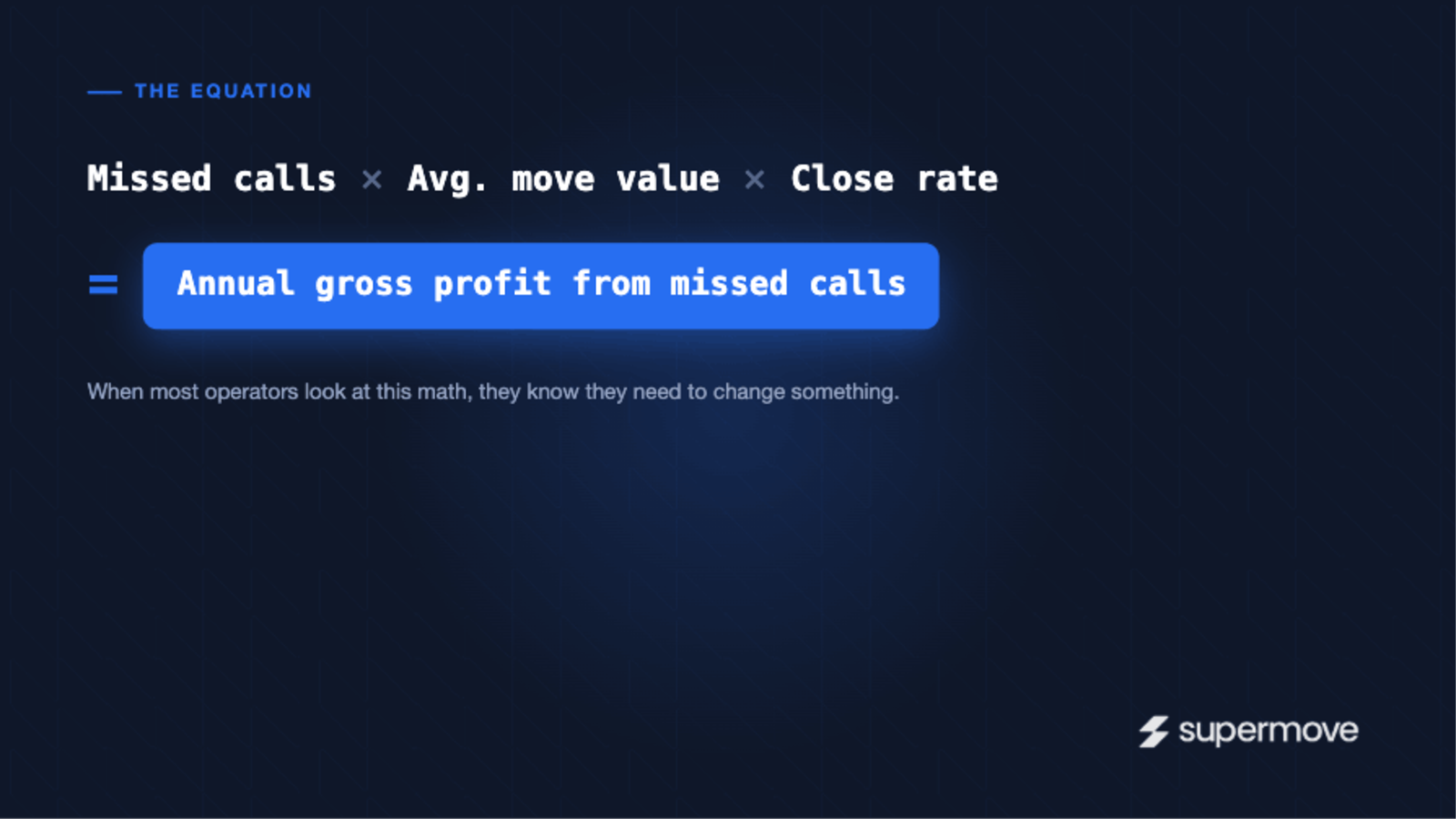
(Number of missed call x average value) x your close rate
= annual gross profit from missed calls
When most operators look at this math they know they need to change something.
Here’s the thing about voicemail in 2026: 85% of callers hang up (and call the next company on their list).
So you generated the lead but then lost it. You can throw headcount at this, but hiring another rep to cover early morning and evening hours means carrying salary for a full-time employee to handle calls that come in unpredictable bursts. Most operators who’ve tried it end up with reps sitting idle 60% of the time and still missing calls during actual spikes.
The staffing model was built for a world where you could afford to miss a few but you can’t anymore.
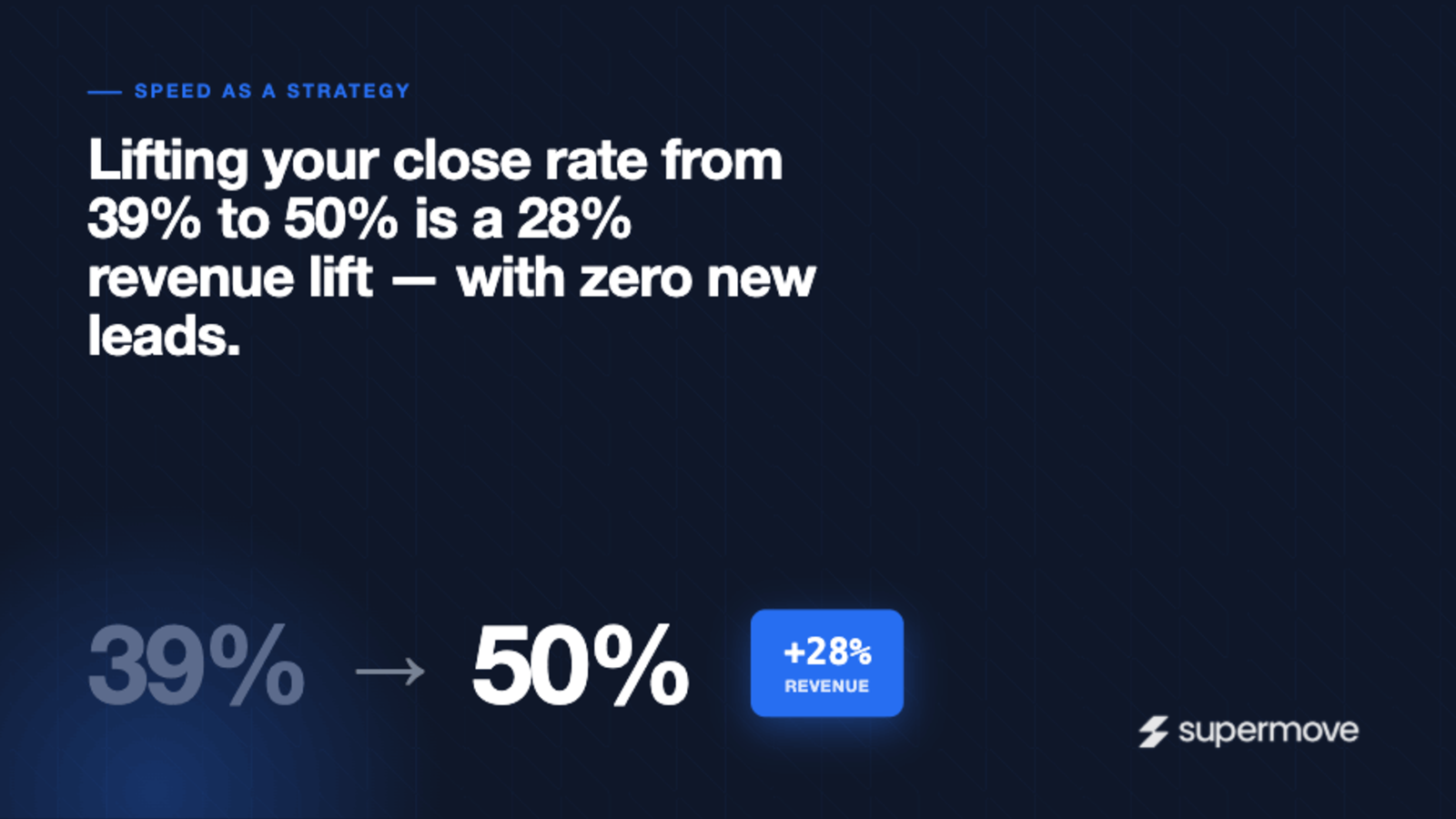
When the total addressable market shrinks, every single conversion matters more. Moving from a 39% close rate (industry average) to 50% is a 28% revenue lift without adding a single new lead.
The fastest path to closing more is absurdly simple: answer the phone.
The data is overwhelming. The first mover to respond wins the business at a rate that makes every other sales tactic look marginal by comparison. Your pricing page, your website redesign, your new CRM workflow — none of it matters if the customer called and got voicemail.
An AI agent can pick up every call that goes unanswered. And a good AI agent can handle the call so you can capture the lead.
Structured intake: Name, phone, email, move date, origin, destination, inventory. The AI captures the same data set on every single call.
Trained on your operation: The AI agent can handle pricing questions and objections using playbooks built from your best-performing reps.
Instant handoff to your team: When the AI takes a call, your human reps get notified immediately with full context notes, so they can follow up as soon as they are able.
A coaching engine for your humans: Every call—AI and human—gets transcribed and scored so your reps get real-time feedback, battlecards, and analytics that make them better over time.
AI today is the worst it will ever be.
It is continuously learning and improving to get better and better over time.Every call teaches it something so objection handling gets sharper, intake gets more precise, scoring gets more accurate. Over six months, you’re not running the same AI you deployed but something better.
Operators who deployed early are reporting 4x returns on investment within the first few months:
Only 44% of movers hit their revenue targets last year. Those that did were running tight operations and answering the phone.
Phase 1: Find the leak
(Number of missed call x average value) x your close rate
= annual gross profit from missed calls
Phase 2: Plug it. Deploy AI as the fallback for unanswered calls and build structured intake with the same fields, every time. Train the AI on your top-performing CSRs and set a 90-day ROI threshold to evaluate.
Phase 3: Expand the model. Once the call center proves out, use call analytics to coach human reps. Extend AI to post-move follow-up and claims handling and build out analytics to identify conversion patterns.
There are three shifts happening that are worth building for.
Corporate relocation clients now expect consumer-grade experiences. The line between B2B and B2C is blurring. Every corporate relocation manager is also a person who orders from Amazon and expects a tracking link. The movers who treat corporate like a different species from residential are going to get left behind by operators who give everyone the same frictionless experience.
AI is moving from tasks to workflows to entire jobs. Within 12-18 months, we’ll see AI go from handling individual interactions (answering a call, logging a lead) to owning entire workflows end-to-end (quoting a move, running compliance, scheduling a crew). The operators building on platforms that support this progression won’t need to rip and replace when the capability arrives.
Twenty systems become one. The next generation of moving companies will collapse their fragmented tech stacks into unified platforms where AI can actually operate with full context. Generic tools bolted together can’t compete with a single system where every department shares the same data layer.
Moving from 39% to 50% close rate is a 28% revenue lift with zero new leads. The margin lives in the conversion gap between the calls coming in and the calls you’re actually picking up.
Sources: NAR Existing Home Sales Report (March 2026); U.S. Census Bureau Current Population Survey (2024); Freddie Mac Primary Mortgage Market Survey; FHFA Working Paper 24-03; MIT/InsideSales Lead Response Study; Supermove Moving Experience Report; Supermove 2026 State of the Moving Industry Report.