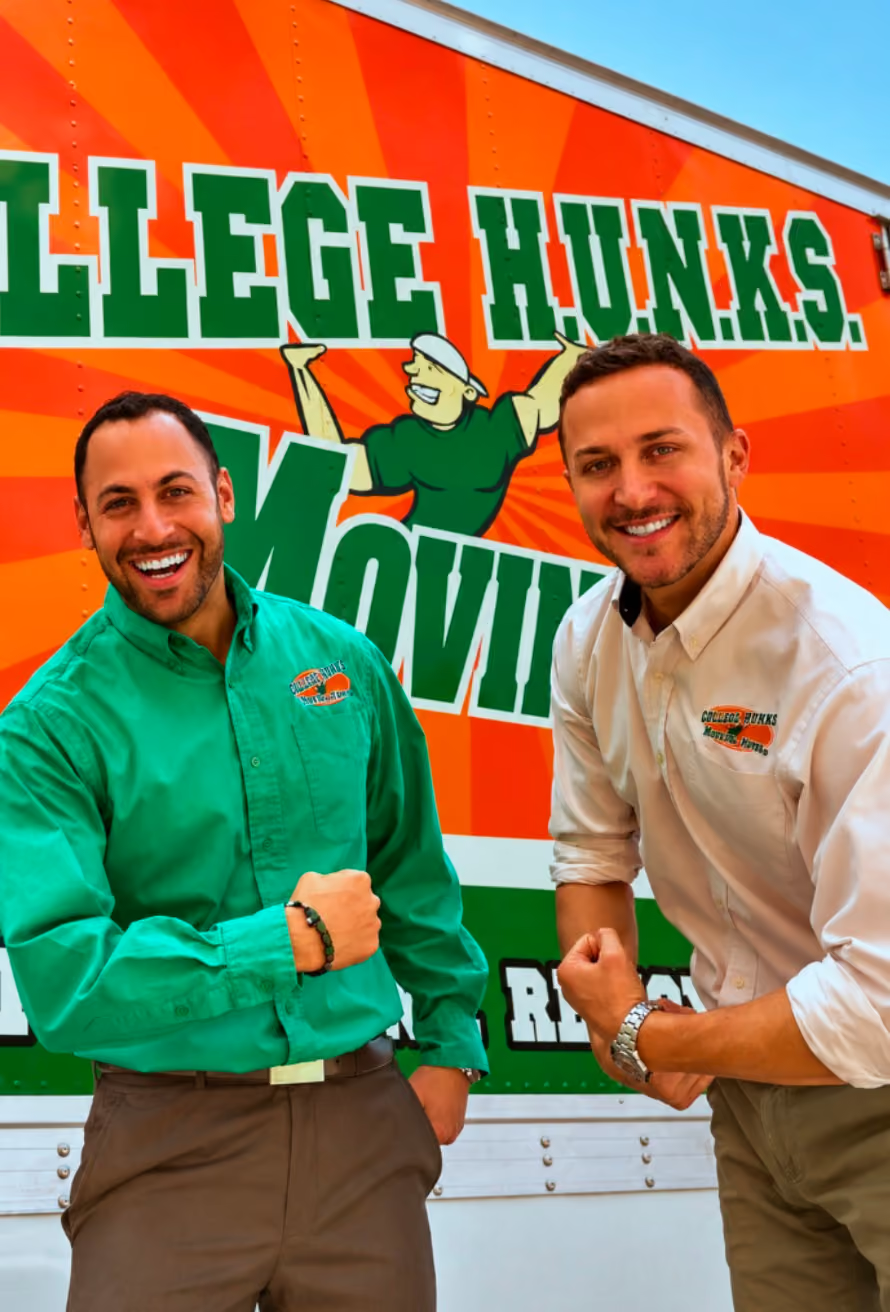
Nick Friedman and Omar Soliman didn't meet in a boardroom or a business class, they met in high school detention in 1995. At Sidwell Friends School in Washington, D.C., two kids who couldn't sit still ended up in the same room reserved for troublemakers. Despite having never met until that point, they quickly became friends, and that friendship forged in detention became the foundation of everything that followed.
In the summer before their senior year at the University of Miami, Omar was home from college. His mother, who ran a furniture store in the D.C. suburbs, had noticed something: customers always asked whether the delivery guys could haul away the old furniture on the way out. This gave Omar a simple idea. People would pay $50 or more just to have something heavy disappear. He borrowed her beat-up cargo van and after lots of long hours, he made $8,000 that summer. No official business plan or employees, no experience. Just a van and the confidence to figure it out as he went. It was his first real taste of what it felt like to build something.
That $8,000 summer planted a seed and Omar's mother gave it a name. "You could be like the college hunks who haul junk," she said, half-joking. At first they laughed it off, but then they realized Omar's mother could be onto something. In 2004, when the University of Miami launched its Rothschild Entrepreneurship Competition. Out of 150 entries, College HUNKS made the finals with a real pitch: while every other junk service was local, anonymous, and forgettable, they wanted to build something fully branded, uniformed, and scalable nationwide. They won first place and a $10,000 check that still hangs on the wall at Tampa headquarters today.
Omar and Nick had serious ambitions for turning the business idea into something bigger. The problem was that they both had just started corporate jobs. Three months in as a research analyst, Nick got the call from Omar. He emailed back: "What's your timeline for launching?" Omar's reply came back in all caps: "NOW". Nick gave his notice that week and they both went all in. They scraped together what they had, leaned on a small bank loan their parents backed, and got to work. By year two, they'd crossed $1.2 million in revenue. By 2008, they were the youngest franchisors in America.
Twenty years later, Nick says "I describe ourselves as a 20-year overnight success. It's been a long journey." The company now has 250+ locations, nearly 10,000 team members, and a Key to the City from Tampa's mayor. The $10,000 check hasn't moved.


Nick Friedman and Omar Soliman have been 50/50 partners since day one. "We're in this together," Omar has said. "Two hands on the wheel."
They made hiring mistakes early. "We just hired a warm body," Nick said. "Somebody who looked strong, somebody who said they could drive a truck and had a driver's license. We very quickly realized that's a recipe for things to go sideways." They began implementing something called a hiring scorecard: a defined mission and accountability framework for every role, measuring the soft skills that actually predict performance.
The balance they've struck since has a name: "Not enough Wall Street, too much Sesame Street," as Omar once put it after reading their early culture statements. "If it's all Wall Street, there's no loyalty, no passion. People are stabbing each other in the back. If it's too much Sesame Street, you've got a daycare where people want to be coddled. We say: warm on people, cold on numbers."
The proof is in the people who've built careers here. Dan Whalen, now SVP of Operations, started as a general manager of a single location. Scott Leffel, the system's top-performing franchise owner, left a VP of Sales role at a public company at age 50 to open a franchise in Dallas-Fort Worth. He now runs four locations, completes 7,000+ jobs a year, and has racked up more than 2,500 five-star reviews. There's a franchisee who came out of the health and fitness industry and spent eight years running gyms. He started his franchise with four trucks and fifteen customers. A decade later he runs an entire region.
The franchisees who thrive aren't the ones with moving industry experience. They're the ones who buy in completely.
That's why the company says no to roughly 90% of franchise applicants. "We're not trying to sell franchises," Nick has said. "We're trying to build a system of leaders who'll go all-in for the first 24 to 36 months." Every year the system comes together at the Hunk Summit, a full-company gathering where top operators teach newer ones, stories get told, and the culture gets reinforced face-to-face. As Omar puts it: "I have a secret. I'm not that smart. The real secret to our success is that we don't have one CEO. We have 500."
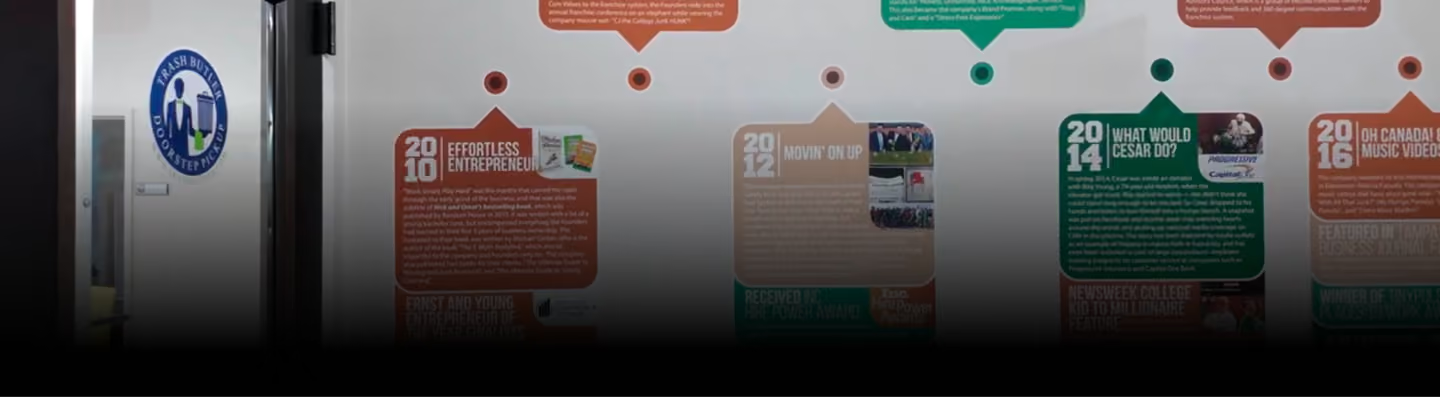
Every day at 11:11 AM, every employee at headquarters funnels into the huddle room. They share good news, call out core value stories and review the numbers. It takes fifteen minutes and it happens every single day. The walls are covered in milestones from every year they've been in business. They call it "the room that junk built." They describe internally the four wheels of the moving truck: building leaders, always branding, listen-fulfill-delight, and fun- safe-winning team. "If they're all moving in unison," Nick says, "it keeps us on the road, keeps us from driving off the cliff, and helps us get to where we're going."
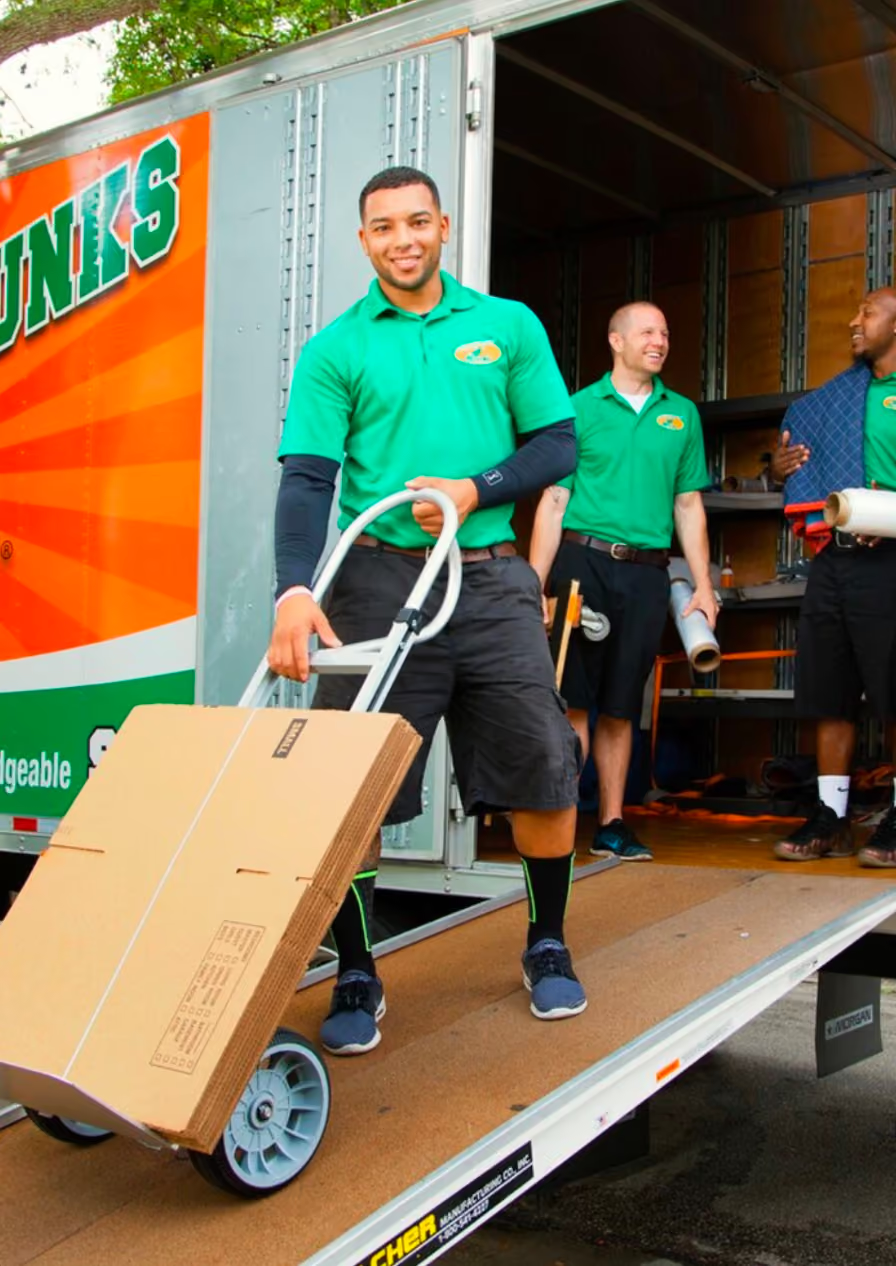
The company's purpose statement isn't about boxes or trucks. It's three words: Move the World. Usually moving comes with life's most delicate moments: death, divorce, a fresh start. Nick describes the crews' arrival like a 911 call: when the truck pulls up, doors swing open, uniforms are crisp, energy is high. The customer immediately feels like these are the professionals they are hoping for.
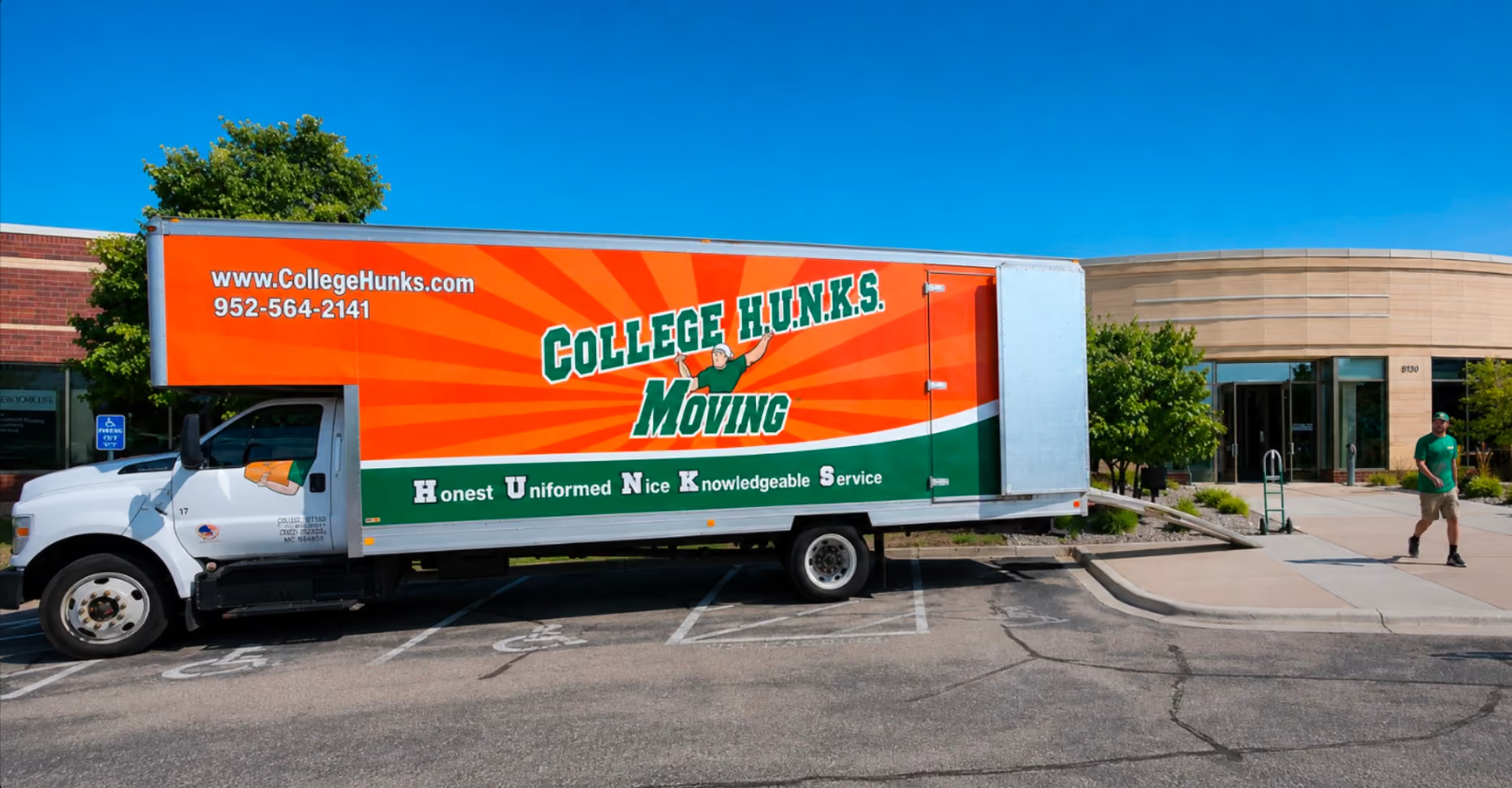
That choreography is what they call the Hunks Way. A documented sequence of customer touchpoints engineered so every single interaction, from the booking call to the final handshake, is consistent, branded, and memorable. In a commoditized industry full of anonymous white trucks and hourly movers, you have to be impossible to ignore. Neon green and orange trucks. Uniformed crews. A name people repeat at dinner.
Roughly 30% of all College Hunks business comes from repeat customers and word-of- mouth referrals, a number virtually unheard of in an industry where it's easy for transactions to be one-and-done. Seven franchise locations earned a spot on the 2025 Inc. 5000 List of America's Fastest-Growing Private Companies. Average franchise revenue reached $1.44M in 2024; the top 25% of owners average $3M+ gross revenue.
Ask Nick and Omar how they've stayed partners for two decades without blowing it up, and they both point to the same book: Traction, by Gino Wickman. Early on, they adopted the Visionary/Integrator framework and drew a clear line. Omar owns brand, marketing, and culture. Nick owns operations, finance, and execution. They stay in their lanes on purpose. It is the template for how the company thinks about leadership at every level. "The business can only grow," Omar says, "to the extent the leader grows."
Omar says the real competitive advantage they have is that they're " a leadership factory." They don't hire for skill. They hire for what they call attitude and aptitude. They hire based on the H.U.N.K.S. core values: Honest, Uniformed, Nice, Knowledgeable, Service-Oriented. Skills can be taught. Character can't. Nick's definition of leadership is precise: "Recognizing potential in another human and having the courage to help develop that potential."
Nick's own leadership philosophy starts with a simple premise: "If you're not learning, you're not a leader." He tells a story about asking his wife what she thinks he's genuinely good at. Her answer: "You're really good at trying to get better." He laughed and said, "Are you saying I suck, or that I just suck less than I did last year?" He's come to think it's the most honest compliment he's received.
His resilience piece comes from an unlikely place: basketball. "I was never the most talented player," Nick has said. "What got me on the court was diving for the loose ball, taking the charge, fighting for the rebound. That grittiness has carried through to entrepreneurship." When things go wrong, and they do, the discipline is to stay urgent in effort, and stoic in response.
That self belief has shaped every hard call they've made. When they famously went on Shark Tank in 2009 and turned down $250K with a 51% stake into their spinoff business idea "College Foxes Packing Boxes", Kevin O'Leary told them "you will never get to this side of the table doing a deal like that. You are being too greedy. You are overvaluing your business." They walked off with no deal, and went back and built a $300M+ company anyway. When Nick went on Undercover Boss, he broke down on camera realizing how far he'd drifted from the front lines. His takeaway became a leadership mantra: don't get disconnected from the people actually doing the work.
In 2026, Nick keynoted at ASI Fort Worth, distilling two decades into a single idea: standout service and reputation - not price - is what builds a durable brand. It's the same thing he's been saying since the first summer they parked a van with a 1-800 number that rang to his cell phone.
Omar will tell you he's long been a student of companies that figured out how to make charitable giving part of how they make money. They don't just have a cause campaign bolted on to their business for good publicity; it's wired into the business model itself. The way Toms or Bombas built giving into every transaction. College HUNKS works the same way.
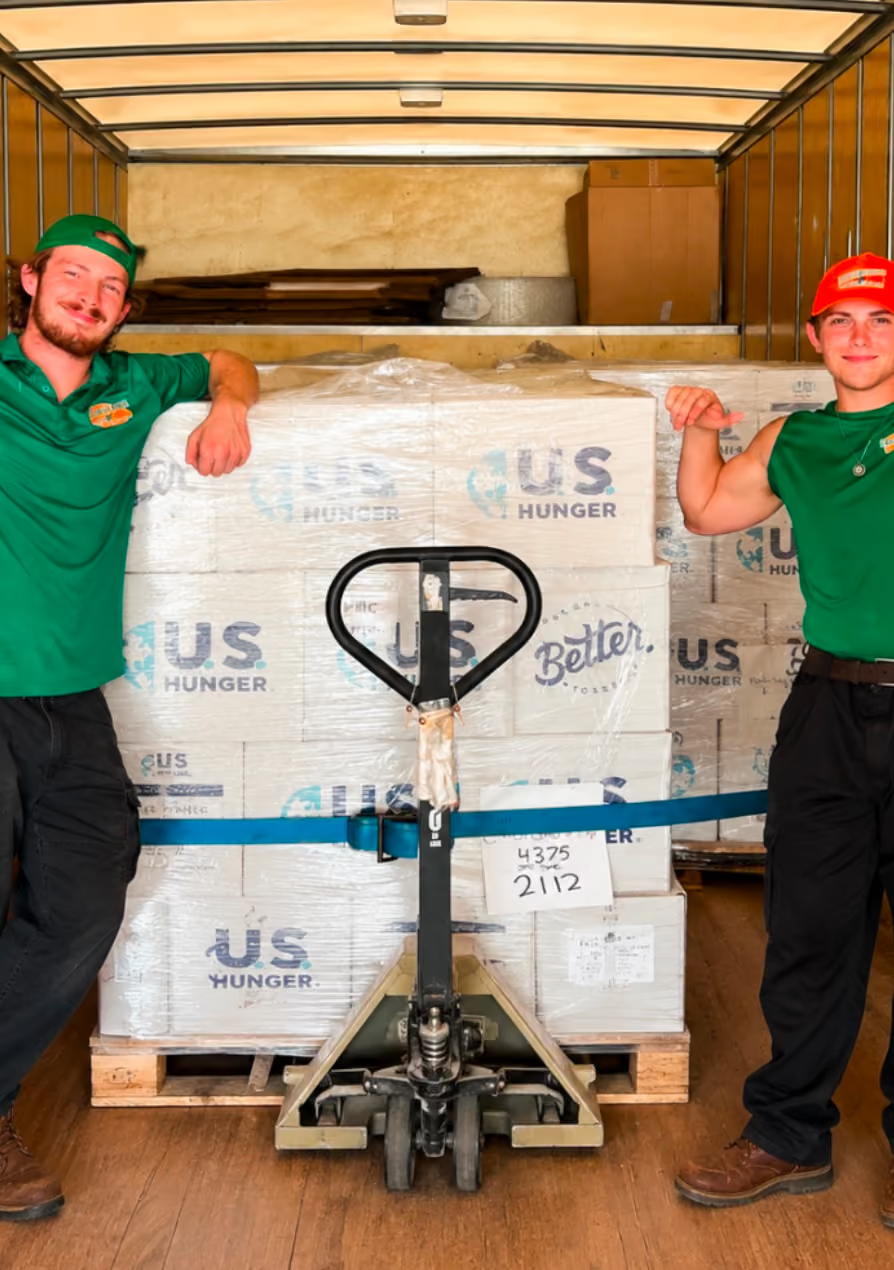
For every job that College Hunks completes two meals are donated to U.S. Hunger, a nonprofit fighting child food scarcity. The partnership has now crossed 5 million meals donated, a milestone the company reached without a press push, because it wasn't designed for press.
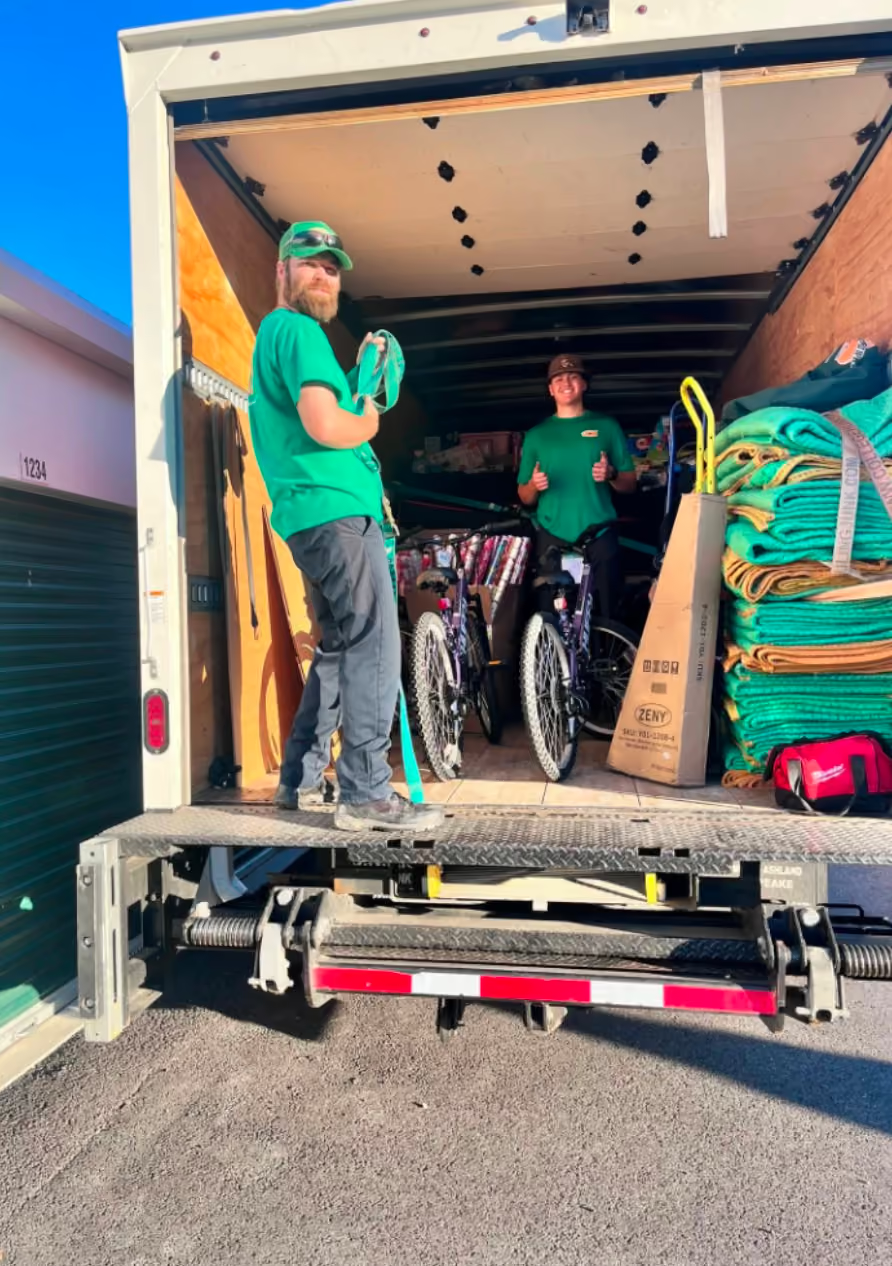
The Safe Moves, Strong Voices program goes further. It was born in 2020, during COVID, when domestic violence reports spiked across the country and shelters were overwhelmed. The insight was simple: for a survivor trying to leave a dangerous living situation, the cost of moving can be the barrier that keeps them there. College HUNKS removed it. Through a network of certified shelter partners, the company coordinates free or heavily discounted moves for survivors. Even more intensely during October, Domestic Violence Awareness Month, and on a case-by-case basis year-round. More than 300 survivors have been relocated since the program launched.
The company also donates items collected during junk removal to Goodwill Industries and Habitat for Humanity ReStores, keeping usable goods out of landfills and inside communities that need them.
When Hurricanes Helene and Milton tore through Florida in 2024, College HUNKS deployed crews for relief work. Tampa Mayor Jane Castor recognized the effort with the Key to the City, the city's highest civilian honor.
"No margin, no mission," Nick says. The company runs profitably on purpose, because an unprofitable version of this mission doesn't help anyone. Every new franchise location isn't just a revenue unit. It's two more meals per job, one more market where a shelter can call and get a crew.
FOUNDED
2003
LOCATIONS
250+
TEAM MEMBERS • SYSTEMWIDE
1,000+
MEALS DONATED
5M+
Headquarters
Tampa, Florid
Co-Founders
Nick Friedman & Omar Soliman
Avg Franchise Rev.
$1.44M (2024) | Top 25%: $3M+ gross revenue
Franchise 500
#383 — 2026 Entrepreneur Franchise 500
nc. 5000
7 franchise locations recognized (2025 list)
Newsweek
#2 Best National Moving Company (2026)
Items Recycled
Up to 70% of all items hauled
20-Year Milestone
2003-2026: from $10K prize to national brand