.avif)
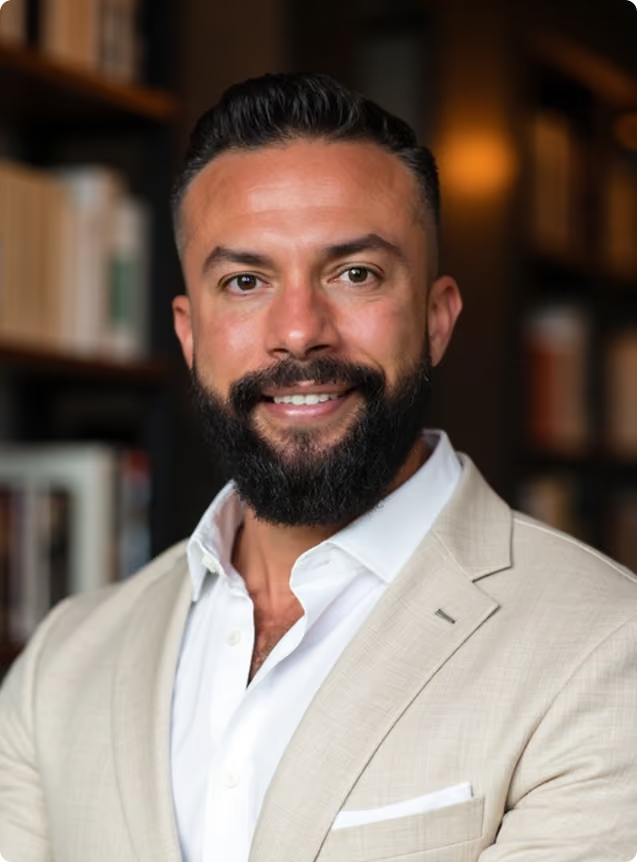
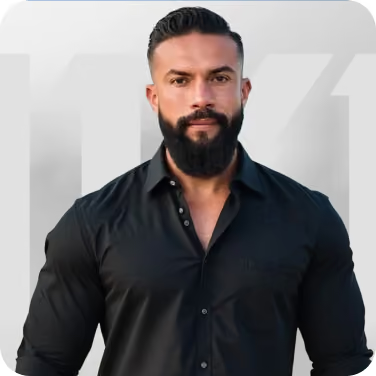
Josh Morales held a license to move people across oceans before he was old enough to rent a car without a surcharge. He'd spent three years at an international moving company in Sunrise, Florida, starting the summer after high school, and at 21 he asked the owner for a blessing to leave and build his own thing. What he wanted was a Federal Maritime Commission license, the credential that lets you ship household goods overseas, and the FMC had never issued one to anyone his age. It took the better part of a year of him proving he had the knowledge and the nerve to run the operation. The approval came through in 2004, and by his account he became the youngest person in U.S. history to hold one.
The early years weren't glamorous. From 2004 to 2007 he ran the whole company out of a 200-square-foot office in Coral Springs: sales, service, invoicing, collections, every bit of it, by himself. His father's vending-machine business was collapsing around the same time (Google's rise had gutted the old advertising model it leaned on), so Josh brought him on at $200 a week to cover customer service while he handled everything else. By 2007 the company had cracked the Inc. 5000 with close to $6 million in revenue.
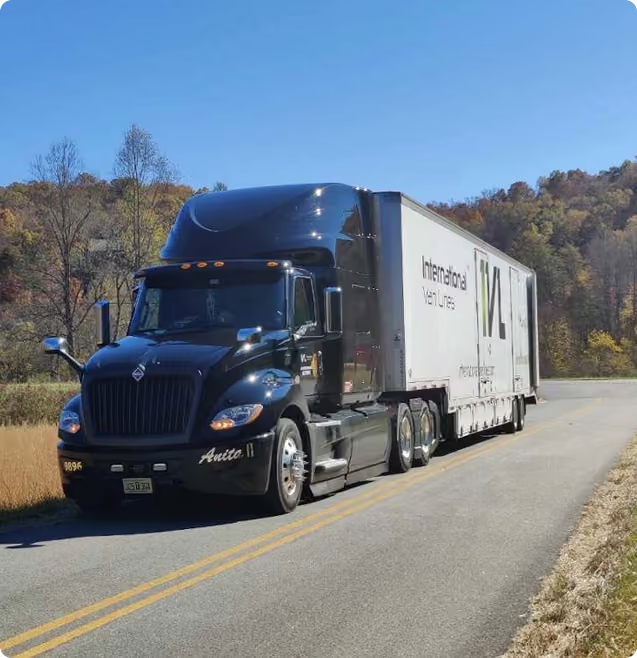
He'd meant to stay international forever. The domestic market was a minefield of broker scams, and he wanted no part of it, but thinning margins changed his mind. Around 2012 he bought a truck, hired a dispatcher away from United Van Lines, and built a domestic division from nothing, which put International Van Lines back on the Inc. 500 at $30 to $40 million in revenue. A move he ran for a Forbes executive became a magazine write-up, and that write-up became a number-one ranking in the publication's home-services moving category. A spot the company still holds. U.S. News followed with a number-one for international moving. Newsweek named it best for customer service.

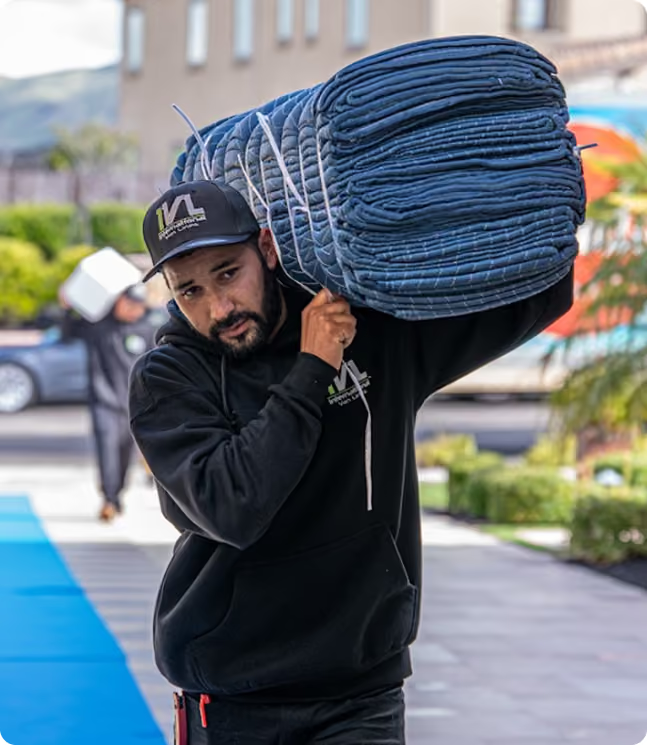
Morales hires for the things he knows he's bad at. He'll say it flat out - he's the ideas guy, the team builder, the one who's good with people, not the one who reads the fine print. So he built the company around the gaps. The clearest example is Deja Brinson, the in-house compliance officer who's been with him seven years and whom he calls "the law of the company." She owns every contract, every line of policy, every DOT audit. International Van Lines has never been fined and has never failed an audit, and Morales puts that squarely on having someone whose whole job is keeping the paperwork airtight, a discipline he openly admits he doesn't have himself.
The hiring screen is simple: honest, easygoing, nobody he has to stand over. Some of the people who knock on his door come straight off the broker side of the business: salespeople who'd been taking customers for a ride and couldn't continue looking at themselves in the mirror. People looking for a company that operates with integrity. In a corner of the industry where plenty of operators never bother, that's what attracts high quality staff to International Van Lines.
What holds the culture together, according to Morales, isn't a handbook. It's a shared frustration with how most of the industry operates: brokers who intentionally scam customers to make huge profits, salespeople who over-promise and disappear, estimates that balloon at the door. The people who build careers at International Van Lines share the basic conviction that it's possible to move people well and run a clean business at the same time, and that those two things don't have to be in tension. And what's refreshing is that Morales doesn't manage that culture closely. He doesn't believe in standing over people. He looks for those qualities, and when he finds them he selects that talent intentionally.
Morales runs on data, not gut. He never finished college; what he knows about business came from books, YouTube, and a lot of common sense. He keeps the marketing budget in his own hands and won't hand it off, because it's the single biggest line item in the company and he wants eyes on where every dollar goes and where it leaks. That kind of discipline that matters more especially now that a single lead can run $200, up from around $40 a few years back, after Google's 2024 search changes scrambled how movers get found online.
He thinks in priorities, not to-do lists. A Jack Dorsey line stuck with him years ago: "if you have more than three priorities, you have none." He treats it as a correction to his younger self, the builder who ran ten projects at once and called it "ambition." Now he picks one or two and drives them hard.
The same intentionality still governs today as the company is entering a new market. Morales spent years thinking about military and government contracts without pursuing them. Not because the opportunity wasn't there, but because he wasn't confident the operation could perform at that level. That changed recently. International Van Lines earned DOD certification for military moves and is now stepping carefully into that arena. The pattern is consistent: wait until the company is genuinely ready, then move. Don't chase revenue ahead of capability.
.avif)
That level of mindfulness also served him well during COVID. When the phones went quiet for two weeks in early 2020, like many others, he was anxious. Then the work exploded. Two straight years busier than peak season, more than 3,300 moves out of California alone in the first quarter of 2022. Morales bought one office-warehouse and a few trucks, banked a heavy reserve, and waited for the cooldown he knew was coming. This set him up to achieve the credential he's proudest of. In 2023, after an Ernst & Young auditor spent days pulling apart every system in the building, International Van Lines earned FIDI accreditation, the highest mark in international moving. They passed at 98%, docked two points for not putting an expiration date on their quotes. Morales felt as memorable and significant as the morning he got his FMC license.
The practical value of the accreditation runs deeper than a badge. FIDI financially backs its members. If an overseas agent goes out of business or fails to pay, FIDI covers the obligation. That makes the network a trusted market, not just a directory. Members are also held to operational standards that include responding to agent requests within 24 hours, maintaining clean financials, and passing annual compliance reviews. For International Van Lines, the accreditation opened doors with large corporations that will only work with FIDI-certified carriers when relocating employees internationally. Organizations that were previously reluctant to partner with an unaccredited firm now engage without hesitation. Morales spent years trying to earn the attention of that world. Now he's part of it.
.avif)
FOUNDED
2004 (Federal Maritime Commission license); the company markets its history as "since 2000"
HEADQUARTERS
Coral Springs, Florida
FOUNDER & CEO
Josh Morales
SERVICE AREA
Nationwide and 180+ countries, through a 3,000+ agent network
OPERATIONS
Company-owned truck fleet with in-house crews — no broker middlemen
MOVES / YEAR
20,000+
RANKINGS
Forbes #1 (moving / home services); U.S. News #1 (international moving); Newsweek best for customer service
ACCREDITATIONS
FIDI (98% Ernst & Young audit, 2023); DOD-certified military mover; FMC-licensed; AMSA ProMover
LICENSING
USDOT #2293832
EARLIER RECOGNITION
Inc. 5000 (2007); Inc. 500 (c. 2012)

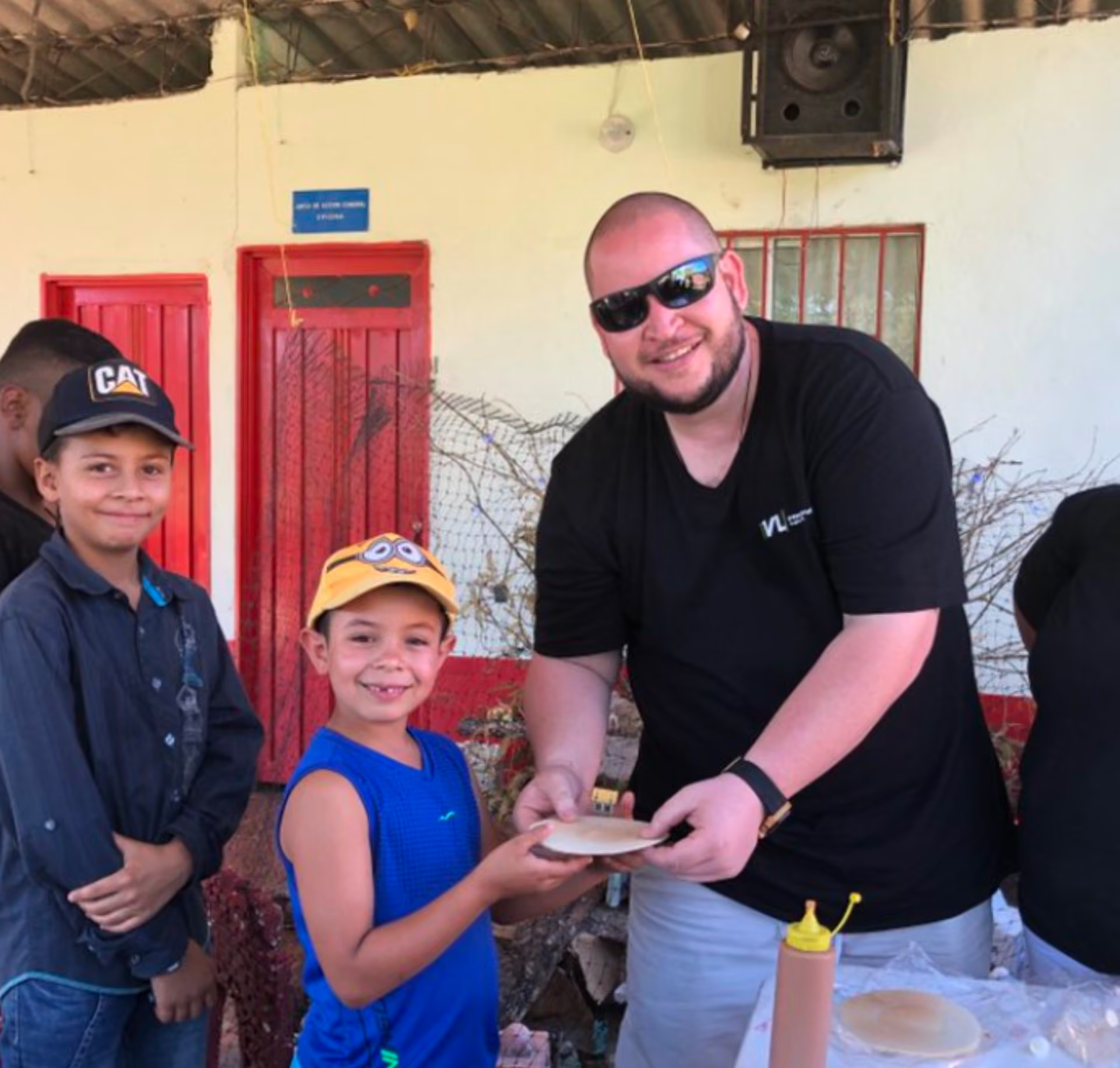
The community work traces back to Morales's own kitchen table. Twelve years ago he and his wife became foster parents through a Broward County nonprofit called 4Kids, and the day they finished the program they picked up two boys, ages two and five. Foster placements usually last a week or two before kids cycle back to family. These two didn't. For three years the biological parents kept missing court dates, until a judge ended their rights, and when no relative would step up, Josh and his wife adopted both boys. The older one is heading into his senior year, has straight A's, honors classes, and is in varsity soccer. The younger, 15, is into music and acting. A week after the adoption closed, the couple learned they were expecting a daughter.
That's why the cause runs as deep as it does. The company writes checks, which Morales calls the easy part, but he's more interested in the hours: backpack drives, toy drives, mentoring, big-brother work. Morales is in the early stages of getting involved with Bikers Against Human Trafficking, a nonprofit working to establish a South Florida chapter out of the Fort Lauderdale area. He rides motorcycles, but the connection to foster care is the real reason. Traffickers target foster children specifically during placement transitions. Kids between homes, without a stable family structure around them, are more vulnerable and less likely to be noticed missing. Morales has been inside that world for twelve years. He's seen the outcomes for kids who age out of the system without a permanent placement: the statistics on incarceration, addiction, and the cycle that repeats itself. Getting the chapter off the ground is still early work, but it's where his attention is going next.