
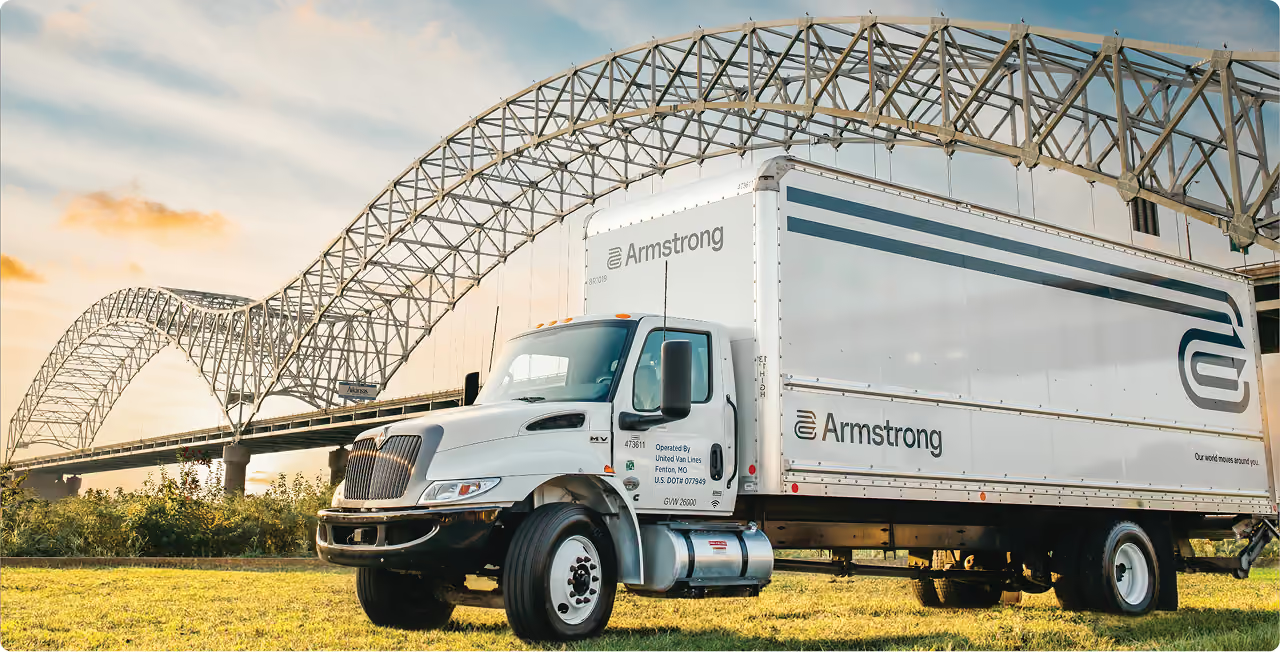
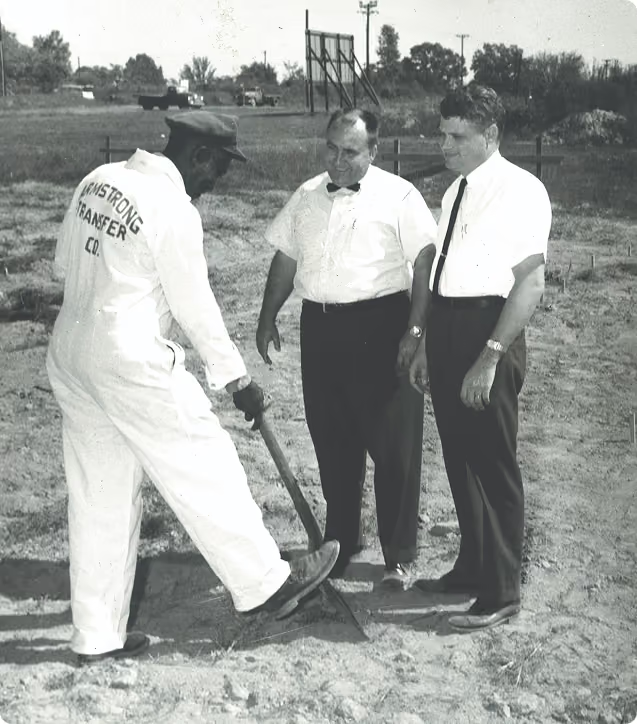
Armstrong's modern story begins in Memphis in 1957, when brothers-in-law Jim Watson and Clyde Springer decided to leave the moving business owned by their father-in-law and strike out on their own. They were 29 and 27, with little capital and no safety net. To come up with the $6,000 down payment, they borrowed small amounts from people who believed in them: neighbors, friends and members of their church. They bought a run-down warehouse, two trucks and a company with two employees. The decision reportedly made for some uncomfortable family dinners. It also created one of the industry's most durable enterprises.
The ambition was there from the start. Early in the company's life, Watson and Springer stood before the United Van Lines board and said they intended to become United's number-one agent. It took decades of hauling, hiring and reinvestment, but in 1984 Armstrong reached that goal. Armstrong has remained United Van Lines' largest U.S. hauler, a status the company still held in United and Armstrong announcements decades later.
The cost of that growth was personal. The founders' children remember fathers who were rarely home because the business demanded so much of them. Tom Watson, Jim's son, started working on Armstrong trucks as a teenager, sometimes logging 70- to 80-hour weeks. He joined full-time after college and would become one of the people who carried the founders' operating philosophy into the second generation. The lesson was not romanticized: building something enduring took sacrifice, and ownership had to mean responsibility.

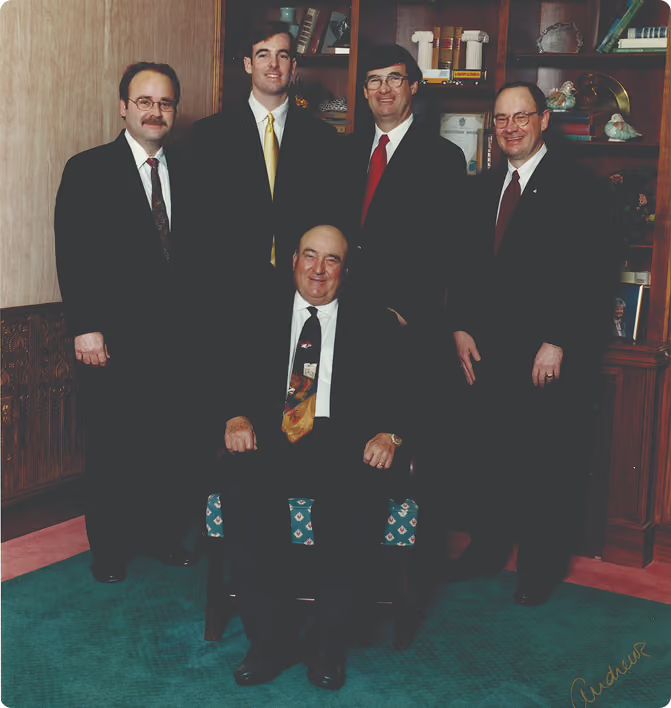
The most important expansion in Armstrong's history may not have been its biggest. In 1969, the company entered Louisville, Kentucky. Rather than run the new market entirely from Memphis, Armstrong sent a family member to lead it and gave that local operator a 25% ownership stake. It became the blueprint for an equity-partner model that still helps explain Armstrong's reach today.
The idea is simple but demanding: put real ownership close to the customer. Local presidents and partners are not merely managers executing a distant corporate plan. They have skin in the game, a reason to build relationships that last, and accountability for the quality of the operation in their market. Armstrong credits that structure with helping it preserve an entrepreneurial culture while expanding across the country.
That balance has become more important as the company has grown through both greenfield expansion and acquisition. In recent years Armstrong has added established family businesses and specialized capabilities, including Boston-area movers MacDonald Moving Services and Humboldt Storage & Moving, Fry-Wagner's Kansas City operation, a Southern California fulfillment platform and Accent Moving, Storage & Logistics in Tulsa. The pattern is telling: Armstrong tends to preserve local expertise and leadership while giving those teams access to a much larger national platform.
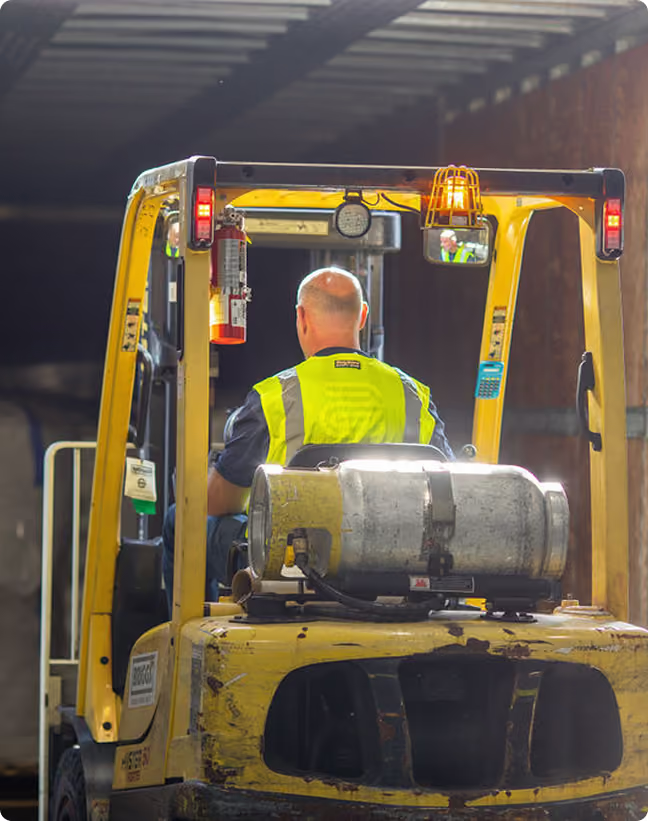
For decades, the easiest way to describe Armstrong was as a mover. That description is now incomplete. The company's own shorthand is broader: people, places or products, Armstrong moves them all.
Residential and corporate relocation remain foundational, but the operation now spans commercial moving, warehousing, transportation management, freight, first- and final-mile delivery, fulfillment, installation, decommissioning and complex project logistics. In Memphis alone, Armstrong publicly lists services ranging from IT disconnect/reconnect and furniture installation to asset management, dock receiving, truckload and LTL transportation, white-glove final mile and pick-and-pack distribution.
That breadth changes the kinds of problems Armstrong can solve. A customer can bring in imported product that needs to be received near port, stored, kitted, palletized, distributed nationally and delivered to a dock or doorstep. A construction or hospitality project can use Armstrong to receive furniture, fixtures and equipment, hold it until the site is ready, sequence deliveries against a construction schedule and install it. A corporate client can use the same organization to relocate employees, move a headquarters, decommission an old space and manage warehoused assets.
What ties those services together is not the truck. It is control over the handoffs. Armstrong has built a business around being responsible for what happens between origin and destination, especially when the work gets complicated.
Armstrong has grown into a national company, but some of its most important traditions still look like they belong to the family business Jim Watson and Clyde Springer started nearly 70 years ago.
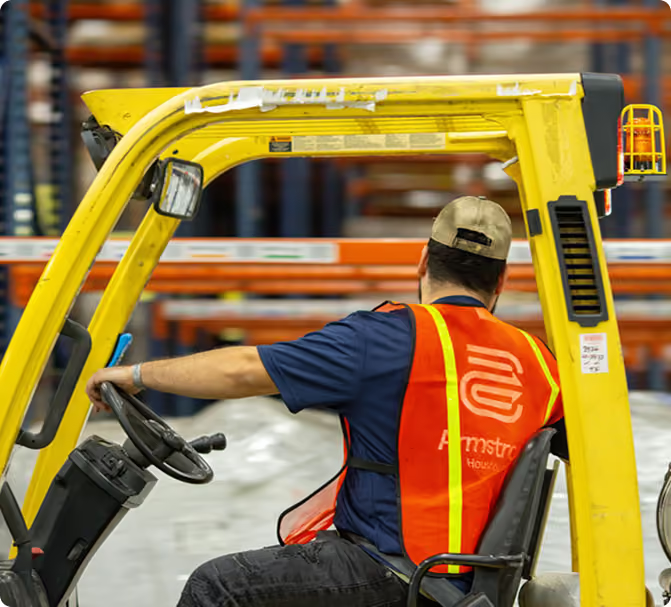
Follow a team in one of Armstrong’s markets and the day may begin with an early-morning dock meeting: prayer, a safety briefing, a quality lesson and customer feedback before the trucks roll out. Walk through the warehouse and you may find the local president making rounds through the aisles. These are small rituals, but they reveal something fundamental about how Armstrong has chosen to grow.
Armstrong describes itself as a family-owned company founded on Christian values and the Golden Rule. Those beliefs are not separated from the way the business is run. They show up in the company’s emphasis on integrity, generosity and relationships, and in the simple advice passed down through generations. Tom Watson puts it plainly: “Do the right thing.” And just as often: “Relationships matter. How you treat people matters.”
That philosophy extends to the customer. One of Armstrong’s core ideas around value is equally simple: customers define it; Armstrong delivers it. Customers, in turn, describe Armstrong less as a vendor than as a strategic partner and trusted advisor. When asked what keeps them coming back, the answers are remarkably consistent: reliability, relationships and getting the job done.
For a company operating across dozens of markets and moving everything from families to freight, maintaining that culture becomes harder with every new location. Armstrong’s answer has been to put ownership close to the work and hire for cultural fit and adaptability first. The company has gotten much bigger. The expectation of how people treat one another has stayed remarkably small-town.
Tom Watson is a bridge between Armstrong's founding mythology and the company that exists today. He grew up doing the hardest work first, joined the business full-time in 1970 and helped pioneer operating approaches that made the company more efficient, including a self-pack-and-haul model. Just as important, he protected the founders' equity-partner philosophy as Armstrong expanded.
His influence is cultural as much as operational. Colleagues and family members describe a leader known for generosity, plainspoken advice and a belief that doing the right thing is not separate from doing good business. Those values passed into the third generation. Todd Watson worked his way from sweeping warehouse floors to trucks, operations, sales and eventually CEO. In 2026, Todd moved into a co-chair role alongside his cousin Mark Pickens, representing the Watson and Springer sides of the founding family, while longtime Armstrong executive Will Abbay became CEO. Tom Watson and Karen Field Isaacman, the founders' children and second-generation leaders, remain on the board.
The transition is a useful signal of what Armstrong is trying to preserve: family governance without requiring every operating role to stay inside the family. Armstrong says cultural fit and adaptability come first when it builds leadership teams, whether talent comes from moving, logistics, supply chain or elsewhere.
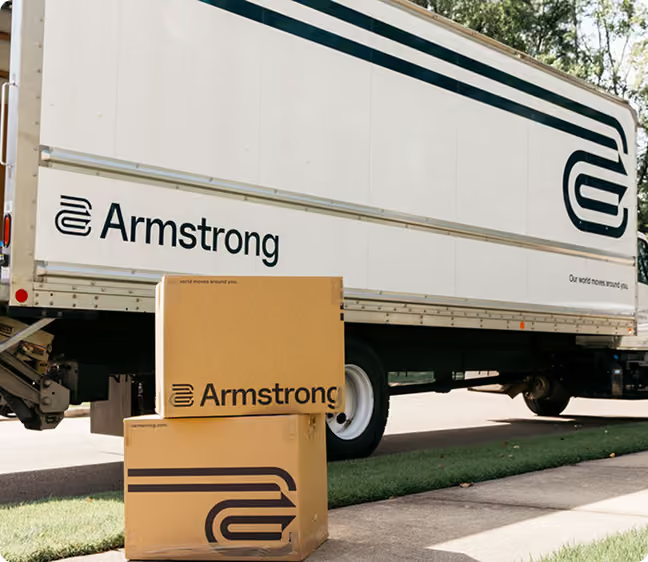
Armstrong is approaching its 70th anniversary from a position its founders could scarcely have imagined: 34 U.S. markets, roughly 1,400 employees and about five million square feet of warehouse space across its network. Yet the company still describes its goal with a word that sounds more like a standard than a growth target: pre-eminence.
That distinction matters. Armstrong is not simply trying to become larger. The company is building a network that can take on more of a customer's movement, from household goods to business assets to inventory, and do it without losing the local accountability that made the original model work. Recent acquisitions in Kansas City, Los Angeles County and Tulsa have added geography and capability, but Armstrong's pitch remains consistent: national reach, local experts, and ownership close enough to care about the outcome.
For a company born from a borrowed $6,000, the scale is striking. But the through line is clearer than the transformation. Armstrong grew because two young founders bet everything on hard work and relationships. It kept growing because they taught the next generation to share ownership, stay close to customers and treat people well. The trucks changed. The warehouses multiplied. The work expanded from moving homes to moving entire supply chains. The original bet stayed the same.
FOUNDED
1957
Headquarters
Memphis, Tennessee
U.S Markets
34 (current public company figure)
Employees
Approximately 1,400
Warehouse footprint
Approximately 5 million sq. ft.
Drivers
365
Van line relationship
United Van Lines; Armstrong has been United's largest U.S. hauler
Core services
Residential and employee relocation; commercial and facility moving; warehousing and distribution; transportation management; freight; first/final mile; fulfillment; installation and decommissioning
Current CEO
Will Abbay
Co-Chairs
Todd Watson and Mark Pickens